This isn’t an entry-level opportunity, but it is a good opportunity for someone with booking experience. (And our little corner of the world is a pretty interesting and fun one in which to work, if I say so myself!)
Indirect Routes
Career paths that share a common starting place in the arts.

Category Archives: Uncategorized
Those darn kids.
I’m finally catching up on some reading, and came across this article about the University of Utah’s student led ArtsForce conference.
What a fantastic idea!
Networking. Résumé and CV writing. Discussing both employment prospects and job satisfaction.
And did I mention that it was a student-driven event? Not something foisted on them by their school, but something that they wanted, that the school also thought was valuable. Win-win!
Tutti bravi to all involved.
(And, more importantly, who’s next?)
Almost ready.
I’m back from 6 weeks on the road.
I’ll be honest: there are so many things I love about the fall audition tour. Sure, the travel can sometimes be a drag, but it’s mostly fairly easy. (Even this year’s impromptu late-night drive from Austin to Houston was actually just fine. If you can sing along with Journey and The Eagles with your boss, it doesn’t get any better.) The opportunity to touch base with people – friends, alums, colleagues – whom I love around the country is such fun. And, lest I understate the obvious, the shared extravagance and responsibility of spending weeks listening to young people sing, and forming a company from their strongest ranks, is both heady and amazingly sobering.
I’ve spent the week with audio and video recordings from the people who auditioned for us for the Studio program. I have all of our reactions from the audition room in prose form, but revisiting their performances after several weeks is informative in a very different manner. I can be a little more clinical, discerning the advantages and disadvantages of different rooms, listening to the pianists’ collaborative efforts, and comparing vocal product to vocal product. The positive surprise is that often our gut reactions are quite good! The not-so-surprising result is that there are always far more interesting performers than we can afford to bring.
I’ve never been great at saying no.
All of this to say that Profile Phridays will be back soon, and I’m excited to share some new stories with you! But in the meantime, suffice it to say that there are good things coming, and I’m excited to share them with you. 
Gone visiting.
You can find me over here, talking about monologue choices.
Too big for one’s (vocal) britches.
We’re in Chicago on our annual audition tour (Day #7, City #3), hearing folks a few blocks away from Millennium Park. At this point we’ve heard somewhere in the neighborhood of 200 singers on the tour thus far. In between singers I’ve been spending a lot of time thinking. Thinking about my own career path, about higher education and its role in a performer’s career, about the arts as a job market. My head is pretty muddled, and I have many more questions than answers.
Many young people (And I’m talking more about the Studio program in specific, although these tendencies do hold their own against the Filene Young Artist candidates to some degree) on this tour have brought repertoire that is, bluntly, not quite right for them. They’re doing their best, they are prepared, but in many cases they’re fighting a fight that they just cannot win. Now, I don’t mean that these pieces aren’t right for them to study – I actually believe that studying rep that’s outside of your fach – heck, even stuff that you’ll never, ever, EVER sing is ok. Learning about music (nay, about anything) in a visceral way is always beneficial. When I would start to lose interest in my piano studies, for example, my high-school piano teacher (the sainted Jeanne Baker from Slippery Rock University) would dangle a piece that was technically way over my head in front of me: it would challenge me in a way that was more exciting than repertoire that was more within reach. But she never let me play that stuff on my recitals – two different contexts, two different types of pieces.
I’m talking about young singers auditioning with repertoire that’s too heavy, that feels constantly one step out of reach, that has a thick orchestration that would swallow their voices 75% of the time and only allow the highest or loudest notes to be heard.
Now, I will attribute a certain amount of this repertoire madness to these singers being young and headstrong – I can guess that as a 20-something I was likely difficult to reason with. (Mom, you don’t need to weigh in on that…) And sometime I’m sure they just say “What the hell! I’m going to put it on my list!” But I must attribute some of it to bad/misguided advice.
Here’s the thing: schools traffic in potential. Faculty in voice programs need to have a bit of ESP to determine which young voices are going to blossom into significant talents. However, even as someone who works at a training program, I still am charged to see these folks as professionals, as potential employees – regardless of their “emerging” status. I can’t put aside the practicalities of their performance to see their potential. The two things have to be in line. So when the aria is technically a step out of reach or two fachs too big, the professional picture that is painted is murky; it leaves me with more questions asked than answered.
Before you think me unsympathetic, I know university professors have their work cut out for them; instilling a healthy, consistent technique in young singers in a short handful of years, preparing them to enter a shrinking job market, pushing the necessity of good health, of continued study, of artistic and vocal development. Distractions are many, hours are long, pay is low and most of them do it for love of the art more than any other reason.
But I might also see university music departments that seem to be balancing their budgets on the backs of their vocal majors, pretending to prepare them for careers in this economy when their faculty – gifted teachers, without question – have more traction with the glory days of opera or their own fledgling careers than the current, problematic national landscape. Students are taught that they can either perform, or teach, with their skill set, and not much else in between.
Two. Choices.
I also understand not being able to be all things to all students, to having to narrow curricular focus in order to delve into a topic deeply. But to do so, at the exclusion of coursework/knowledge that will enable students to work, to professionally present their very best selves, is shortsighted at best, deeply wrong at worst.
I have pals and readers here who teach, so I’d like to open up the dialogue. Am I wrong? Is there anything to be done?
More questions:
- Students, are you having conversations with your professors about what constitutes study material and what material best represents them in the wider world, and where the two diverge?
- Faculty members, are you aware of where your students fit in the national opera scene? Are you letting them know that, while they may sing Brangäne in a school production (poor example, but you get it, right?), that doesn’t mean that they’re hirable as Brangäne at a professional company?
- How do we, as an invested community, prepare artists for the realities of today’s economy while also developing informed consumers of the art form?
Big questions. No easy answers.
You know, when I was in undergrad we had a cut system – at the end of every year, certain students would be “invited” to change majors to Humanities or something else. I remember thinking it was horrifically cruel, but in retrospect I think it may have been valuable: to have one’s path be questioned, to take in the weight of that invitation and decide to either explore another field or to dig in, knowing that more was demanded.
Am I way off base? Do you have thoughts as to how we can address this in a larger way? What programs are doing a good job of preparing young singers for the profession? Who is giving good advice? Comments or email – I’m all ears.
Audition Tour Day .5
I’m writing this from New York City.
It’s well before midnight on Friday night, but rather than whooping it up on the town I’m already in bed (admit it, you’re secretly a wee bit jealous), soft music playing in the background, a journal and a stack of postcards within easy reach.
Tomorrow morning I’ll get up early, get some fresh air with Ethel, and then settle in for an intense day of listening. Because tomorrow starts our annual audition tour. We do this wacky thing where we embark on a national talent search (think Opera Idol), but we don’t pick the projects for next summer until we’ve heard all the singers. It’s bass-ackward from the industry standard, and I can’t think of another company who does it this way. But for us? It totally works, and allows us to make big, ballsy choices while being reasonably sure that the result will be fantastic.
If we had to do it conventionally? Well, I reckon the result would still be good, but it would be much more conservative. More Mozart, less Stravinsky. More safe choices, fewer calculated risks.
(I’m glad we do it this way.)
The downside is that the listening saps my energy in a way that regular office work never could. And so I have to build more quiet time into my schedule than my inner teen (and her FOMO) would like. Being an aural worker in a visual society feels like that first day back to the gym after a hiatus..it shouldn’t be so difficult, but it’s heavy lifting!
So, tomorrow is the first day of school. And 30+ young artists will walk through the door to perform for a panel of 3.
(Best. Job. Ever.)
Materials.
It’s so difficult to represent ourselves accurately on paper. When you’re trying to move from a performance résumé to an academic CV, or from the professional world to academia, or from performing to the non- or for-profit worlds, it’s hard to reframe experiences in a way that makes sense.
Linda Essig has a lovely outline for artists trying to put together a CV for academia. It makes sense to me – what do you think?
Homecomings.
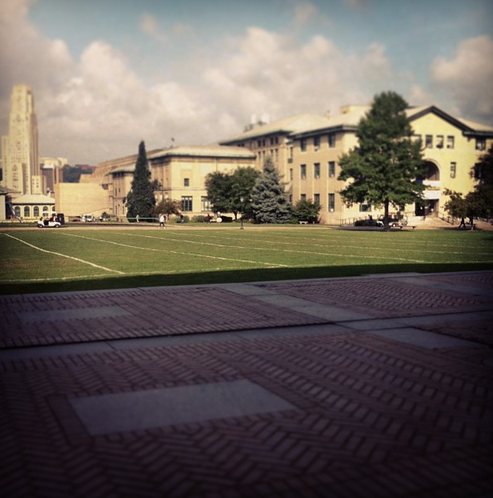 On Thursday, I went back to my undergraduate alma mater, Carnegie Mellon, and spoke to a music business class and to the school of music’s undergrads.
I was nervous.
I was also flattered as hell to be asked – it’s a heady thing, being asked to return to the scene of the crime and draw parallels between one’s career and one’s training. Now, I’m realistic in knowing that a school has to fill X number of slots for this weekly seminar, and I’m providing an outside perspective. But I still totally walked onto the stage at Kresge (which was Drama turf when I was a student, so it felt both wrong and oh-so-right!) and thought “Hot. Damn. I’ve made it. Dad woulda been proud.”
Looking back on when I was a student, I can’t remember one person speaking to us during Convocation who wasn’t a performer. The push towards the stage was strong, focused, and unrelenting. And any support and guidance ceased immediately after graduation. I had a love/hate relationship with the school for years, both because I felt cast-off after graduation AND because, once I opted out of performing, I figured that they wouldn’t give a rat’s ass about my career – even though I used my musical skills on a daily basis.
I was delightfully, 100% wrong.
The new administration was fantastic, and actually addressed the phenomenon that I felt as a recent grad. They talked about the processes and classes that they’ve instituted to help students track their skills as they relate to the field. They implemented a great mentoring model, one about which I am 100% jealous!
The students, both in the class and the seminar, were inquisitive and very self-aware. I asked for questions at the end of my speech, and there were none, but there was a long line of students who met and chatted with me after the talk.
(And the Dean might’ve called me a Rock Star. #WINNING.)
Thanks, CMU, for welcoming me back so warmly.
And also, for not asking me to sing.
Messy desks.
I don’t know about you, but I’m feeling a bit more validated. If you need me, I’ll be hiding behind that stack of papers and the lava lamp…
U-Turn, or Back to Beginnings
I’m in the thick of things at work, screening applications for the audition tour which starts in just a few weeks. (It’s early this year, lovelies!) There are 2 big operas premiering in town that I’m hoping to catch in the next 10 days. And this is happening on Saturday – I do love getting gussied up!
But even bigger on the ol’ personal radar is a short stop in Pittsburgh, addressing the students of my alma mater. I’m a little nervous! But I’m hoping I have something of value to share with one or two of them.
Honestly, I’m beyond tickled pink to be asked.
I’ll post the speech (pending reception, of course) here, just in case anyone’s interested.
 Indirect Routes