Reading List: Artistry, Discipline, and Measuring Success

I’ve found two articles that I think are worth reading – and they’re related, although not by intention.

The first is this, which talks about redefining musical success in areas other than winning competitions or selling hundreds of albums.

The other is this, written by this week’s Profile Phriday interviewee. We talked a bit about his devotion to a specific martial art (I learned about him initially through a mutual friend who is a fight choreographer), and though it didn’t make it into the final interview, it is a big part of who he is. With me, and in the attached article, he talks about the amount of time it takes to master an activity and makes a compelling argument for finding the art, the beauty, the discipline in all one does.

I’m considering this pairing my dose of inspiration for a long weekend.

Tagged , , , , , , , , ,

A Craftsman of Ideas: Jeff Gaynor

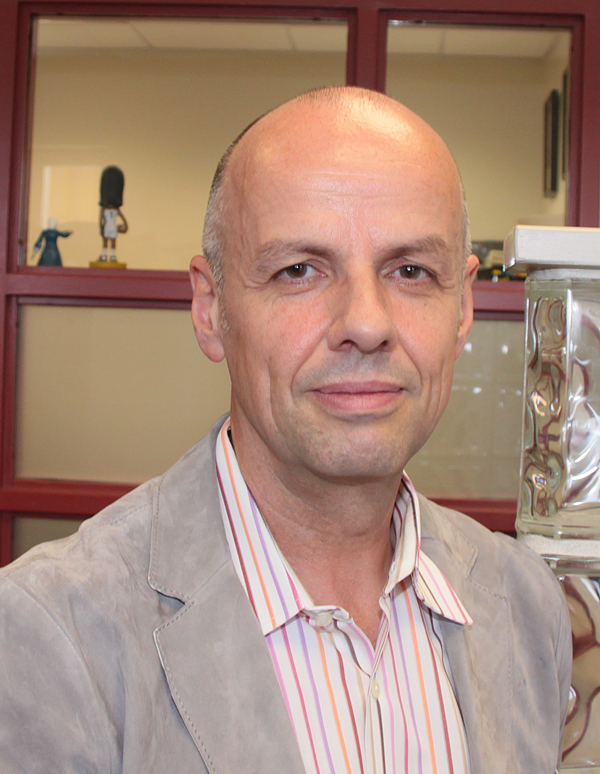
Jeff-GHappy Profile Phriday! This week I’m thrilled to introduce you to Jeff Gaynor. Jeff started his collegiate education as a musician, and is now part of an esteemed computer think tank. Here’s his story:

Ok, so let’s start at the beginning. What got you interested in music?

It was the day my brother brought home the album Switched on Bach. I was probably 11 or 12 at the time. It was trendy enough that I’d listen to it in the first place.  The music was something else — I’d never really heard classical music before and I devoured that. Thanks to Wendy (Carlos) for giving me a lifetime source of joy! I played double bass a bit, so I ordered the parts to several of the pieces and got so I could play them along with the record. I tried playing a bass a year or two ago and found that all these years later I had the bass parts note-perfect memorized.  In any case, from there I got everything I could lay my hands on as far as Bach and more generally Baroque Music. I started my own chamber orchestra at 14 or so and started taking keyboard and composition lessons at Wittenberg University with a pupil of Paul Hindemith.

After I got into Indiana University as a bass major, I decided to switch to organ performance. Why? Well, it was less portable than a bass for one thing. Another is that most of Bach’s best writing is for the instrument. I own a nice 3 manual and pedal instrument and still play for myself and friends.

So, you got an undergraduate degree in Organ Performance, and a harpsichord minor. But your Master’s was in mathematics? Tell us about your path from undergraduate studies to graduate school.

There were several factors that converged during this time in my life.

The first had to do with the rigor of the course of study. At one point I started a Masters in Music at IU and one of the first classes I had was Music Theory. Now at this point I’d been happily taking Math classes as my hobby during my Music degree, so I had good exposure to great thinking, solid methodologies and what good theories look like; and frankly, Music Theory is intellectually an embarrassment. Not too long before this, I was accompanying a student of Josef Gingold, the famous violinist. He was a fabulous musician and teacher – one of the best I’ve ever met. He was amused because he had to rush off for a hearing related to someone’s doctorate in violin. He went on to state flatly that he never learned violin in a university and felt odd being at the center point of a degree program. He and the rest of the faculty he was going to meet were awarded honorary titles and such so that the university could make it look like there were academic credentials behind everything and he really did not take that too seriously. Why should he? He was a Musician’s Musician and didn’t need it. This, along with the above incident made me feel less like I was getting an education (which I was in the Math. Dept.) and more like I was being led on.

And that’s half the story. In the early spring of my senior year I re-injured my knee – an ACL tear. I had been working as a church musician for a couple of years by that point. I quit working and started a Master’s in Early Music the next fall, but it was clear that my knee was in dire need of repair. I got disillusioned that first semester and had surgery the next, taking the rest of the year off to ponder. And while that’s a pretty easy surgery these days, when I was having it done it was a pilot surgery and I was in a cast up to my hip. There’s no fitting behind an organ bench with a cast like that!  Fortunately I got some work for a couple of months as a computer programmer too which helped me realize that the Sciences were where I should be.  I actually played my senior organ recital at almost the same time as I earned my Master’s in Mathematics, so I have much less time between my degrees than most, at least on paper.

Wow. So you had a major surgery that forced you off the bench, and had been having second thoughts about the degree. Was it easy to walk away from music at that point?

I missed it at first and felt quite lost. But that ebbed since I knew that a change had to occur.You see I’d already been working as a musician while an undergraduate and that’s when the reality hit: Organists are among the most widely employed and heard (live) musicians around, and the pay is dismal. Holding down a few jobs, teaching and trying to eke out a meager existence is the reality. Also the fact is that musicians are contracted to play music, so generally as a player you don’t get to choose what to play, but are instead obligated to play what people want to hear. (Doesn’t matter how awesome that Boëllmann toccata is, the bride will kill you if you substitute it for her Celine Dion!) So what I observed with others who were working was that they gradually got more jaded and cynical then really slide into just going through the motions. My decision then was simple: I really love Music and decided not to let anything kill it for me.

You then went on to earn a Doctorate from Reprecht Karls Universitaet in Heidelberg, Germany, in pure Mathematics – with honors.

Yes. My specialty was elliptic functions and non-orientable minimal surfaces. (Ed.: I don’t even know what that means…but it sounds super cool!) I’m the only American student the faculty knew that did a complete course of study in Math in the German university system at that time, rather than just a few semesters abroad.

You mentioned feeling disillusioned with the scholarship and intellectual rigor as an undergraduate. Especially taking into account your experience with the German system, can you talk a little more about that?

The main medium of learning for people is cultural — sitting at the elbow of a master and being able to observe the hundred little things s/he does without thinking about them. Books, classes, workshops etc. will ever be a pale second to experiential learning, and this is why we have dismally poorly educated students coming out of schools and I do include colleges in this. There are scandals about football players with college degrees that can’t really read, but I don’t think that a lot of other students are too far ahead of them. So, the point of this paragraph is that people in the arts should be learning as apprentices. This gives them a good feeling of quality.  If you are in some art degree program that doesn’t park you next to a master, you probably are getting half an education. I also found that the rest of the degree was essentially trade school and had very little to suggest it should be treated as an academic subject. Sorry, that is the truth. The greater Truth here though is that if there is no real academic part of Music, why is it at universities? This is more of a cultural item in the US that everyone needs a college degree (at last count about 40% of the population in the US has attended college compared with roughly 10% in Europe.)

Also one of the more important bits of advice I can give from having lived my professional life in and around universities is this: You are being systematically lied to by them. They are not interested in giving you good career advice: universities just exploit the very American idea that education will save us and lead to a better life. Since for many students the price is prohibitive, this means that the whole reality of student life is assuming crushing debt for no sure return. Hortatory nonsense about art for art’s sake or following your heart just masks this (and can be relied upon later to make you devalue yourself since “doing it for the money” is pretty much a sin). Debt will keep you impoverished and you can’t really start living your life well until you pay it off, be that 10, 15 or 20 years. Avoid debt unless there is a clear return. Departments need students to justify their existence, and universities now often approach 50 or 60 administrators per 100 students (was 3 per 100 in the 1960’s). All of these people need lots of students to pay their keep.

Them’s fighting words! The logical next question: how would you reform those very programs?

Administrators are not set up to change this from the inside nor are they capable of understanding the limitations on learning their institutions impose.

A school needs to provide the experience of learning at the elbow of a master. They need to teach strong critical thinking skills and lean on historical information so that students can pull together cultural and historical landmarks. To know when a piece or the performance practice was written simply skims the surface: to put it into a historical context with world events and the culture in which it was created (and that in which it’s being performed) allows the performer to relay the story with a cultural and historical awareness that is more informed, and I’d say much more compelling.

Who were the masters with whom you studied?

In Music I studied with Anthony Newman and later Marilyn Keiser. Newman gave me quite an appreciation of technique and Marilyn I think did more for getting me to just be Musical than anyone else. Can’t thank either of them enough. In Math. probably Dr. Challifour who was a Mathematical Physicist. He wrote up notes for each class every term which amounted to writing a text for each class. This was invaluable in many ways. Also Albrecht Dold, a famous Mathematician who wrote a scary hard book on Topology. I dearly loved his classes since the way he thinks is simple, elegant and profound — often annoyingly so (“NOW WHY DIDN’T I SEE THAT?????”). I really aspire to that still. My advisor, Friedrich Tomi, showed me the value of spare measured prose and how to approach thinking about hard problems. I had arguably one of the better educational experiences ever at Heidelberg. This has allowed me much perspective on education in the US.

Music. Math. What do you do now?

I work as a computer researcher in Cyber-security at the NCSA. This is a very venerable think tank that has, among other things, invented the web browser.

Can you cite anything from your musical background that has pulled through to your current position?

Attention to detail. A Japanese saying “One who has mastered a subject shows it in all they do” applies in spades. Getting good at something requires dedication, discipline and hard work — all of which are in very short supply in this world. You will go far if you have the work ethic of a musician.

I come from a family of craftsmen – master woodworkers, mostly. (You can see some of their handiwork in the rotunda at the University of Virginia) The family name is Critzer (pronounced without the “t”) and the road that runs in front of the old family is still called “Critzer Shop Road”. It was called that because on Sundays it would be packed with buggies waiting to be serviced for the week. You can see the road on the map here.

Doing good quality work was paramount: now that I’m an idea worker, the same principle applies.

I despise people that tell you to follow your heart as a career path, because you will ultimately be providing a service to make a livelihood and will, as I found, lose control of it. Make a split ‘twixt what you love and what you would feel comfy doing as a job. I really enjoy research and where I work, but when I leave at the end of the day, I’m off work. Then I can hop on the organ bench at home and make the cats really fluffy…

What advice would you give to a student struggling with this decision?      

A story about Mozart, his father and sister is in order. When Mozart was younger (around 6) the three of them were travelling and ended up staying in a small monastery. The story goes that they all ate dinner and afterwards the kids, being, well,  kids, snuck into the church there and Mozart started playing — just improvising. The monks heard the Music and gradually come from the rest of the monastery,  then one by one they would walk a few steps into the church then be completely transfixed by the Music and stop in mid step. In this way he managed to turn a whole monastery to stone. That is the effect music should have on people. That is what art ought to do generally. (Famous painting of it is here.)

More to the point, I feel strongly that “Art is the only dignified human undertaking”. By this I mean getting something to work in an organic way, i.e. make doing whatever its own art form. Playing a piece of music slightly out of tune or with poor rhythm is glaring to a musician, most of whom will strive to fix it as a reflex. Apply that type of thinking to everything else and you will never want for a job. The only way you will ever attain this is to throw yourself at something you love and do it as a labor of love.

 Finding the art in every action…words to live by. Thanks for sharing your story, Jeff!

Gridiron incongruities.

I’ll admit it. I’m a football fan. (My dad was the high-school French teacher, yearbook advisor, and JV football coach; language, photos and football were as important as church in our house – maybe even moreso.) And this Super Bowl has made me happy in several ways (other than the glaring omission of my team in the lineup): the selection of Ms. Fleming to sing the National Anthem, and the aplomb and class with which she did so was a lovely, lovely thing. 

An opera singer delivering the National Anthem with ease and grace.

Halftime commercials with classical music and ballet featured.


Friends, could the tides, in some small way, be changing?

Tagged , , , , ,

Sarah Andrew Wilson: Two Choices.

Sarah Andrew Wilson

Today I’m talking with Sarah Andrew Wilson, who is currently the Assistant Director of Education for the Levine School of Music, a multi-campus nonprofit community music school with locations in and around the great Washington D.C. area. I first met Sarah when we were colleagues at Wolf Trap – here’s her story. 

How did you get started?

Well, when I was a high school senior, and I said that I was interested in pursuing music, I was told that I had two choices: to perform or to teach. I wanted to perform, so I chose that avenue, and attended University of North Texas for Flute Performance.  It’s a huge flute school, and also a huge jazz school. I’d hang out with the classical musicians, but I really liked what I saw the jazz students doing, and wound up going to a lot of jazz events.

My senior year of undergraduate work, I remember thinking “Wait. Am I ready to perform? I mean, I’m only 21…am I ready to take auditions now?” I decided to get a Master’s Degree (at Arizona State University) to fine tune both my playing and my options – and actually started it in Music Education. About a year in I realized that I was spending way more time practicing than I was on my music education coursework, so I switched back to straight performance. But I had a teaching assistantship, and I enjoyed it, so I decided that I would do both – perform and teach – when I graduated.

When and why did you move to the DC area?

Short answer? Because I was young and crazy. Right around the time I was finishing graduate school, my then- fiancé (now husband) was working in politics and received a job offer in DC. I was self-sufficient and movable – I could set up my teaching studio anywhere – so we said “Let’s move to DC! Adventure!”

So we moved!  I knew building a studio in a town where I knew no one would take some time.  So I decided to find a temporary full-time job; that way I could build up enough funds to live on, and then could quit and go back to just teaching and performing once I had enough students. I sent my résumé to companies that I found interesting, regardless of whether I was qualified for the job. (Production job at NPR? NPR is cool! I don’t know anything about radio or production…but what the heck, I’ll apply anyway!) After a while, I was hired at the Washington National Opera as a contracts administrator – I got to see contracts for AGMA musicians and independent contractors, worked with all the departments at the Opera, and even met the Artistic Director Placido Domingo on several occasions. I started to really enjoy it. I didn’t know that I could work with fellow musicians – my people – and help create something with a high level of artistry without having to either be a performer or teacher. It really opened my eyes.

You know I have to ask: did you leave after three months?

No. I stayed for a year and a half – it was just too interesting to leave! But, after that year and a half, I was doing too much – teaching and performing and administrating. Something had to give, so I left the position and focused on building my studio and lining up performance opportunities. For two years after that, I played, I taught, I ran the Flute Society of Washington, and conducted a small ensemble.

But I eventually found that I missed it. It sounds really nerdy, but I missed a lot about administration – the structure of it, the variety of people I would interact with on a daily basis. As a teacher most of my interactions were one-on-one with my students, and I started to feel a little isolated. I started to realize that I’m more of an extrovert than an introvert – I’m not totally outgoing but I feel more comfortable around people. I also missed the coolness factor – having Placido Domingo say, in his accent “Hello Sarah” was an unrealized perk, and I missed that, too.

My next three positions were at two different organizations: I jumped back into the administrative side of things working for the Thelonious Monk Institute of Jazz. I had a love of jazz from my undergrad days, and I got what those guys were doing. It was a fairly small operation, and they accepted me on a provisional, week-long basis. I worked my hardest to make it my best week ever – I kept talking about the future, setting up meetings for the following week, talking about ways that I could help…it must’ve worked, because they hired me full-time. It was a cool job – I managed education tours for musicians like Thelonious Monk, Jr. and Herbie Hancock. Watching those great artists teach, invest in the next generation, just hit me in the heart. I was still on the education side of things, which felt comfortable, but instead of teaching I helped to support them, and make sure they had what they needed.

When I felt like I was ready for a new challenge, I took a position at the Wolf Trap Foundation. It was great to go from a small company to a larger department, a larger organization. I was in charge of any education programs that took place onsite: from Baby Artsplay and community music classes to master classes with dance companies to managing the award-winning Internship program. (This is where I met Sarah. – Ed.)

Two years into my work at Wolf Trap, the Monk Institute called – they had created a new position with national reach and a great compensation package, and I couldn’t turn it down. (It’s not something that’s often discussed, but it’s difficult finding something that you’re passionate about that will also allow you to pay your mortgage.) The programs impacted thousands of students across the country, and I got to travel a lot, which I really enjoyed.

But the saying “you can’t go home again” really did apply, and after several more years at Monk it was obvious that it wasn’t a great fit.

So I took some time off.

I applied for new positions, but also worked a great part-time job with an events company: it was flexible, and I enjoyed it. And, because it was flexible, I was available when WPAS called because they needed an artist handler for Jean-Yves Thibaudet. (Ed. – Shut. Up. So cool!) The time off afforded me the time and mental clarity to find and pursue a position that I really wanted. The Levine School had been on my radar since moving to DC, and when I saw that they had a position open I contacted the people I knew who worked there, just to let them know that I was interested and applying. It’s funny – at other times in my career I’ve known when it’s been time to move on, but since arriving at Levine I feel like I’m at home. I work with 150 wonderful musicians and educators, and it’s so easy to advocate when they’re your people. I understand their struggles – filling their studios, developing programs, schedule flexibility, travel to keep their musicianship relevant; I’ve been in their shoes.

Congratulations on finding your place, and your people. Any advice or lessons learned?

It’s a marathon, not a sprint. College conservatories aren’t set up to be trade schools –they’re set up to teach you how to think critically, how to get through a discipline, how to do detail work, how to research. Even folks with performance degrees are likely not going to be performing right out of school, and that post-school can be really difficult and demoralizing. The long view is important.

Go with whatever comes your way and try different things. I think of the music industry as a tree – different branches that grow out of a common language and shared discipline and creativity. If you’re exposing yourself to those different branches, you’re learning about what you do – and don’t – want to be doing. It’s just as important to listen to your negative experiences, and analyze them to see what parts to carry forward and which to discard.

In thinking back over our conversation, it sounds like I’ve bounced around to various positions, but that’s what it takes to find your way.  There are many branches on the tree, and eventually you find the one that’s right for you.

Tagged , , , , , , , , , , , , , , ,

Opportunity: Leadership Intensive

OpAmOpera America is again offering a fantastic professional development course for Opera professionals. The application deadline for their Leadership Intensive is January 31st. As a member of the inaugural class, I can tell you that the experience changed my perspective on the business and my role within it profoundly, and that’s in large part due to the people I met and worked with there. Their advice, expertise, and support have been really invaluable – and the fact that they’re great fun makes our continuing connection something I look forward to greatly.

It’s a wonderful experience – I recommend it wholeheartedly!

Tagged , , , , , , , , , ,

Nigel Boon: A Leave of Absence.

Nigel BoonHappy New Year!

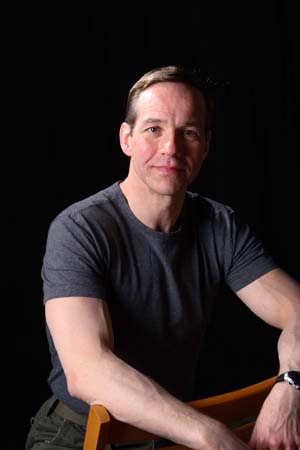
 For our first Profile Phriday of 2014, I’d like to introduce you to Nigel Boon. Nigel is the Director of Artistic Planning for the National Symphony Orchestra, a world-class ensemble based out of Washington DC’s John F. Kennedy Center for the Performing Arts. (Their summer home is our place – so I may be a tad biased about how wonderful they are, but that doesn’t mean it’s not true!) His story starts in childhood, and winds through different countries (and continents!) before landing him on our shores. Here’s his story.

Nigel, tell us a little bit about your childhood, and when the classical music bug really bit.

Well I grew up in the south of England, but my dad was  in the British Military, in the Royal Navy, so every so often we’d move away for a couple of  years and then come back home again. When I was ten, we were living in Malaysia, because he was stationed at a naval base in Singapore.  I had a 27-mile  each way school-bus commute that required my passport, journeying from Malaysia to Singapore each day to school. (Ed. In comparison to my “walking to school, barefoot, in the snow, uphill BOTH WAYS” stories, you win. Hands down.) When I got back to my school in the UK my new classmates all looked at me as if I was this freak with a suntan! But I had already experienced living in a different country, in a different culture, and that’s one piece of advice that I have for people: live abroad – it will change your perception of life, the world, your own country, yourself, and your own possibilities. After returning to the UK, I started grammar school (correlates to middle & high school here in the states), and fairly quickly found myself at the top of my class in music and languages.

Very cool. What was your instrument?

I never learned to play an instrument – it never occurred to me, never occurred to my parents. We didn’t have much classical music at home, so it  never really came into question. But I really enjoyed my general music classwork at school. However, when I turned fourteen I had to deal with a formidable timetable clash – I was forced to choose between continuing with music or studying German (which we will see later was a great irony). The British school system channeled you very early into specific educational directions, so I was forced to choose the direction of my future university course of study by the time I was sixteen. So I chose German over music and therefore subsequently ended up on a language and linguistics course at University in York. I wasn’t smart enough or old enough at the time to understand all of the possibilities and ramifications of my decisions.

At university I rediscovered classical music. I had a friend who had what for me at the time was a huge record collection, with over a hundred-fifty classical LPs. I was looking through them one day thinking “Oh, I’d like to hear that! And I’d like to hear that! And that!” And that was pretty much it – I was hooked by music, and nowhere near as excited about my language studies. I thought that studying linguistics had only two possibilities: I could either teach or research, and I didn’t want to do either of those things. I just wanted to be able to speak languages.  So, come the end of my third year at university – the third year of a four-year course – I had managed to spend so much time and money listening and listening and listening to classical music that I had got myself into a situation where I had 80% of my university coursework to do in my last year.

Ouch.

Yes. My supervisor at the time – who also loved classical music, we had gone to a few concerts together in Leeds – he said “You know, take a year’s leave of absence. Go away, think about what you want to do, and I’ll sign the form for you, I’ll authorize it.” That, I thought, was actually fantastic. And I’m still on my year’s leave of absence!

Really? (Slow clap from the Editor.)

I really have no doubt that I was too young for university – I even took a year off between grammar school and university to be a language assistant in Germany, but still, it wasn’t enough time.  I was a very young 19 year old and couldn’t realize all of the possibilities at the time. (My alternate theory is that we live our lives in the wrong order. Because what could be better after a fulfilling life of work than to go and learn? And then when you’ve learned, what about just playing?) (Ed. LOVE it. I could totally get behind that timetable.)

So, there I was. I moved to London, applied for a job at a music publisher – Boosey & Hawkes – and was interviewed by someone who is still, these many years later, a very close friend. The official part of the interview must’ve lasted 5 or 10 minutes – it was an entry level gopher job –  and then we chatted about all of the concerts we had been to, the one we were coincidentally both going to that evening, and I think he recognized a like soul, someone who was almost fanatically passionate about classical music. And I was, I was like a sponge, it was like osmosis, I was sucking up everything that I could find anywhere and everywhere. Which, given what I’m doing now, turned out to be really useful, because my knowledge base is very broad, very wide.

I was at B&H for two years, during which time I realized that what I really wanted to do was to work for a classical record label. I saw an ad in the London Evening Standard one day, and it was a completely basic, banal ad, obviously placed by an agency, and it said something like “Record company seeks person.” I mean, really so basic! But I thought I’d look into it, and contacted the agency, and they sent me for an interview. Deutsche Grammophon was the label, which was strangely the only classical label I had ever wanted to work for. It was the perfect label for me. I went for an interview, and it turned out that the job was for stock control. So, during the interview I said “Well, I’m not sure that this is the job for me.” And they agreed, and said that they’d keep my name on file in case anything else came up. Of course, I was pretty disappointed and went back to my office…but later that afternoon I got a call, and it was DG saying “Forget the first job, we actually have another job that’s about to open for Advertising Manager, Would you like to come and do that?”  “Of course I would, thank you very much!” And for three years I did the press, trade and program book advertising for DG and its sister label, Philips, in the UK. After three years I got a call from the head office in Hamburg, (and here is the aforementioned irony), inviting me to move to Germany to work in their head office in Hamburg because I was fluent in German. My love for living abroad made it an easy choice, and in 1984 I moved, and although I initially thought I would be there for two or three years, in the end I was there for 15 years.

Amazing. You were in the thick of things, at one of the biggest, best labels in the world, right when the classical music recording industry was really booming.

True. I went in as Product Manager, responsible for all new releases, and then a few years later became Head of Product Management, which included back-catalogue re-releases and some marketing responsibilities.  But I remember my first day, when I was meeting everybody, and I met the producers. And I thought “Oh, that’s the job I really want, but it’s really not a job I’m ever going to get, because I have no musical education.” And then ten years later I became a producer! There were two types of producer at DG, Recording Producers and Executive Producers. Executive producers are rather like those in the film industry – they look after the recording careers of soloists and conductors, putting together their recording schedules & plans, deciding rep with the marketing department, and then putting it all together and making the projects happen – booking the halls, soloists, etc.  I was lucky enough to work with a number of extraordinary musicians such as conductors Oliver Knussen, Mikhail Pletnev, André Previn, Christian Thielemann, Neeme Järvi, and baritone Bryn Terfel.

That job, and this job at the NSO, have been the two most fulfilling jobs I’ve ever had – I’ve enjoyed them all, but these two were/are the best.

You’re obviously not still with DG now – what happened, and when?

In 1999 the writing was on the wall for the major classical labels. When I started in 1981 there were, I don’t know, maybe 15 complete Beethoven symphony cycles on disc. But by 1999 there were perhaps three or four times as many.  But there weren’t three or four times as many buyers and costs had increased, sales were down, and it was clear that product was flooding the market. The labels were looking for the next 3 Tenors, the next blockbuster, which didn’t fit with my aesthetic. And I was ready for the next challenge. I went to London and worked in artist management with Harrison Parrott. It wasn’t a great fit for me, because I was suddenly on the other side of the fence.  I think I felt more at home as a “buyer” and much less so as a “salesman”. It’s a subtle shift of perspective, but one that I struggled to make. I stuck it out for 2 years and then I was offered a position back in Germany, but I wasn’t quite ready to move back there or to take on that particular position. So I freelanced for a bit – I worked with a Baroque ensemble in the UK, a contemporary group in Oslo in Norway, a contemporary music festival, a music publisher, a couple of individual artists – and then three years later I got two almost-simultaneous phone calls.

One call was from Boosey & Hawkes – their Director of Publishing, who had joined B&H when I was first there, asked if I’d consider being Head of Promotion for 6 months, while the incumbent was on maternity leave. The focus was on promoting the work of living composers, and I was excited by the thought of taking on something I had not done before. After a month they asked me if I would want to stay on beyond the original six months, and when my colleague returned from maternity leave we found that neither of us wanted a full-time job, so we very amicably divided the composers between us and continued to work together. It was the perfect job share.

The second call was from a former colleague at Deutsche Grammophon – she and conductor  John Eliot Gardiner had married, and he had made recordings of all of the Bach sacred cantatas – 57 cds – over the course of a year. DG had decided to not release them. But her invitation, “We’re going to set up our own record label – would you like to help?” was irresistible. So we set up a very special small record company that is still putting out recordings – Brandenburg Concertos, Brahms Symphonies, wonderful things all with John Eliot. I divided my time very happily between this new label and B&H for about two years.

I have to say at this point that I’ve been very lucky, and more than once – I’ve been at the right place at the right time a number of times, and I’m very aware of my good fortune.

Then, in the middle of 2006, I got another phone call, this time asking if I’d be interested in talking about an opening at the NSO, the programming position . It was again something that I’d never done, and it was again abroad – I was, of course, interested! I had an hour-long phone conversation with Rita Shapiro (the Executive Director of the NSO), and came to interview in September 2006. I started in February 2007, and here I am.

It seems, looking backwards, that you found the things that were interesting to you, and just kept looking for opportunities to learn and grow.

I have to admit that I’ve never really known what I wanted to do. I knew I wanted to work in music, I knew I wanted to work in the recording industry, but I had no idea of what my career trajectory would look like. However, now that I’m in this job, and only now, does everything I’ve done up to this point make any kind of sense. Because when the phone rings in my office, it’s almost always someone that’s doing something that I used to do. Artist managers, record company representatives, publishers – I have experience in all those industries and can put it to very good use in this job.

It sounds like your approach to going wide as far as skills and repertoire have served you well. What advice do you have for folks struggling to figure out their career path?

For me one of the most important things is to not force matters. When things don’t work out, or aren’t immediately clear, don’t feel you have to push to try to find an immediate answer. Don’t necessarily feel you have to make a decision under forced circumstances. Frequently if you wait for two weeks the answer will materialize, and the thing will suddenly somehow fit together.  Also, don’t feel you have to have your career path mapped out before you when you’re 18 or 20 or 22.  You don’t.  Try things out.  Learn from them.  Don’t worry if one thing doesn’t work.  Usually something else will work.  If you’re open to change and are flexible, it will appear to you that there are more possibilities.

Tagged , , , , , , , , , , ,

Opportunity: Operations Administration Internship with the NSO

The National Symphony Orchestra

The National Symphony Orchestra

My colleagues over at the National Symphony Orchestra are looking for a spring intern in Operations Administration. It’s an unpaid internship; that being said, there are few places to get this kind of exposure and opportunity in the DC area. And I can say firsthand that the folks that work there are not only first-rate musicians and administrators, but also first-rate people.

Applications have officially closed, but you can still submit a résumé and cover letter using this link.  If logistics are your thing, and you also love classical music and working with artists, this might be a perfect fit for you!

Tagged , , , , ,

New beginnings.

I’m a sucker for fresh starts.

As 2014 dials down, I find myself thinking about resolutions… and I’m eschewing the usual, predictable ones.

I’ve been reading a lot about systems; focusing on them rather than the elusive goals that you hope they’ll lead to, using them to help your willpower. (Here and here.) As a process person, that shift of focus might be the key for me to get some interesting stuff done in 2014.

(As a friend used to say, “Deny yourself nothing in a dream.”)

Sending you wishes for a wonderful, interesting, prosperous 2014. Let’s do this, shall we?


Tagged ,