Category Archives: Uncategorized

Out of Office

Posting will be light (read: likely non-existent) this week, as I’ve been selected as one of the participants of Opera America’s inaugural Leadership Seminar. The festivities kick off at the yearly conference this week in Philadelphia, with big days of seminars, meetings, and performances. The main thrust of the conference is Creative Resurgence, a theme that I think meshes quite nicely with this little corner of the internet: I’m looking forward to sharing stories with you all upon my return.




Critical mass.

The beginning of the summer season has totally thrown my publishing schedule for a loop, and I apologize. But I do have things to share with you, and will be back to semi-regular publishing after the Memorial Day holiday. Please check back!

Wishing you all a weekend of lovely weather, relaxation, icy beverages and grilled tastiness.

Divining Rods and Dreams

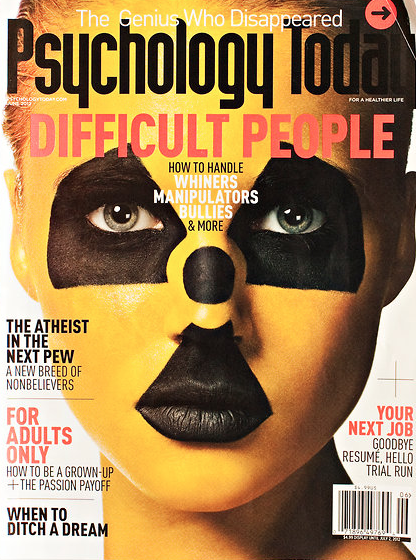
There’s a great article in this month’s Psychology Today magazine penned by Augusten Burroughs. (I’m trying to find a link to the article proper, but it’s resisting thus far.) At first, it seems like a downer: it’s about giving up dreams.

He speaks about reciting a poem for a school performance…and how he knew that it was genius. He was genius. He was an actor that was only seen once in a generation.

And then he saw the video. Without the emotional pull of performing…he saw himself perform.

Augusten Burroughs (“Running With Scissors” and a new book, “This Is How”) thought he was a great actor until he saw himself act on tape. “Thank the Lord Jesus for making video recorders and play-back decks at just exactly the right moment in time. Because I was able to now see myself not in my own mind, but rather with my own eyes. And it was a stunning revelation.” Burroughs refreshingly suggests that sometimes, people are better off letting go of their unrealistic dreams. (from Vera Titunik‘s article for the Times.)

The unvarnished, unsubjective truth that this video showed him? Is that he was, sadly, not the best, most fantastic actor of his generation. (I think he used the word “mannequin.”)

But – and here’s the kicker that sticks with me – the reason behind his wanting to act? The real reason? Was because he wanted to connect with people.

And so he started to write.

(I think we’d agree that he’s a fantastic writer…maybe even a better writer than he might’ve been as an actor.)

But the real nugget of wisdom? Comes in the fact that he figured out what his real purpose was…to connect with people. Once that truth was divined? He just needed to tweak the method…in his case, from acting to writing.

In mine, from singing to administrating.

What’s your true purpose? Are you living it? How can you get there?

Hold, please…

Hi friends,

I’m futzing with the layout and such, and have spent a little too much time tweaking layouts that don’t ultimately solve the problems, and much too little time editing profiles. If you have an opinion on the layout that you’d like to share, please do so in the comments or via email – I’d love to hear the ways in which you think we can make this better!

Stay tuned on April 20th for our next Profile Phriday! And thank you for your support and patience.

-Lee Anne

3BR, 2Bath in Search of a Second Career?

The New York Times today is celebrating several career changers who made the transition from performing careers (actresses, rappers, even a hand model!) to selling real estate. The performing aspects of sales, the flexible schedules, the professional autonomy, all plusses for many performers seeking out a Plan B.

Selling real estate has long been a second or third career choice for most agents, a place to turn when the children grew up or Plan A didn’t quite work out. And while in much of the country moonlighting homemakers and former lawyers dominate the field, New York City is a different story. Here, the arts are a magnet and the dreamers run thick, so the first career of your real estate broker might just be a doozy.

“People come to New York from far-off lands and states with a dream,” said Leonard Steinberg, a managing director at Prudential Douglas Elliman and a former fashion designer. “Oftentimes, those dreams don’t pan out as well as you’d like them to, and then you start looking at alternative careers.”

What do you think?

Tagged

Charisma

As performers (and, perhaps more truthfully, auditioners), we all have ideas about the image that we project.

We’ve been coached by teachers that our audition begins before we even set foot in the room. We know that, in order to give our best audition that we need to be fully prepared. We know that it’s our job to make a connection with the panel somehow, and that, more importantly, that connection needs to be positive.

We visualize walking into the audition room: entering with confidence, greeting the panel, discussing rep with the pianist. We visualize how that first piece will go, how that wild-card second piece (because they will naturally ask for it) will somehow be even better than the first. We see ourselves leaving the room feeling good about our performance, the reactions of the panel, and our future prospects. We know that running through that scene in our heads and filing it with positive value will help us give stronger auditions.

And even though our hearts may be busted if we don’t get the job, we know that that impression that we’ve made on the panel will follow us, making things easier or harder in subsequent auditions. It’s the reason we celebrate a good audition in addition to a job offer: because the audition is important; and the way we present ourselves, personally and artistically, is as important in the audition room as it is onstage.

These visualization techniques are one of the Jedi mind tricks that author Olivia Fox Cabane cites as a way to improve one’s charisma. In an interview for Fast Company, she talked about the several types of charisma that exist  (focus; visionary; authority; kindness), and how one might cultivate those characteristics. (I for one was pretty excited to find that introverts can excel at developing focus charisma, as it calls for blocking out everything save for the person with whom you’re talking.) She talks about the ways in which charisma is essential for building businesses.

And I have to say that, of the performers I know? Well, y’all are not close to being short on charisma.

Take this as just one skill that, while it might not show up on your resume proper, will help you through this professional journey.

One of the fabulous things about starting this project is poking around on the internet, and then suddenly falling down a wonderful rabbit hole, full of insight and perspective. I was groping around (thanks, Google) for one of my favorite Goethe quotes:

Whatever you can do or dream you can, begin it. Boldness has genius, power and magic in it. Begin it now.

And I ran across Sarah Peck.

Her corner of the web is full of articles about purpose, about connection, about the very things that make life and work meaningful. This particular article is about taking action, making a decision.

We’ve all been at that spot, whether professionally or personally, when we need to make a decision. And we realize, even if for just a fleeting moment, that not making a decision is in fact still a decision.

There are times in our lives when those decisions are exciting, energizing. Other times when the simple need to make a decision is utterly defeating.

Sarah has two recent articles that are worth their weight in time (because, honestly, time seems more valuable than gold in the current market) that I’d recommend to you.

  • The landscape of work is indeed changing. Some food for thought here.
  • Action. Resolve to take action.

It’s Wednesday. Midweek. Is there a better time to act boldly, in this low trough between weekends?

I submit, there is no better time.

Evaluating/Re-evaluating

So, maybe you’re perfectly happy in your current profession, and read this occasionally just to check in or read a profile (Hi, mom!). If so, then read on, and thanks for coming!

But if you’re dissatisfied in some way, but not sure whether it’s worth making a move? Well, that’s a more difficult spot to be in, for sure.

And if you’ve decided that you need to change things up but haven’t the slightest idea of where to go next?  Well, circumstances can dictate that you take the first thing that comes along, rather than examining what you want to do/who you want to do it with.

I offer, as some food for thought, some reading:

  • Chris Guillebeau from The Art of Non-Conformity posted this graphic from Sarah K. Peck. Simple questions, but your answers might surprise you.
  • This article from Inc. by Jeff Haden about what makes a remarkable employee. In what kind of professional situation might this describe you?
  • Danielle LaPorte talks about clarity, and trusting your gut over your head.

Some big thoughts for a Sunday morning.

Melissa Collom: Finding Value on Both Sides of the Footlights

Melissa Collom earned a BFA from Carnegie Mellon University in Vocal Performance; she currently balances work in the non-profit and political arenas with an active performing schedule. Here’s her story.

How did you get started?

Like many American kids, I grew up with musical theater and imagined that as the goal. During high school my voice teacher, Sara Callanan, encouraged me to try to some classical music and arias. So, motivated by positive feedback and encouragement, I gradually spent more and more time doing classical music. In high school and college I had some great moments on stage when I felt like I could hold the attention of everyone in the room, sometimes even make them laugh or cry. It was an extremely powerful and addictive feeling!

So, why the change?

I had been doing “day jobs” between singing gigs for many years, but this was one of the first that was really meaningful and rewarding to me. Suddenly I felt like I was contributing to a cause that was (much) larger than my own vanity, which is what trying to be a singer can sometimes feel like. Then, in 2008, I had a major (non-singing) health issue. Since then I have needed the stability of a job that provides good health insurance and steady income.

I currently manage the college intern program at the national headquarters of Planned Parenthood Federation of America, though I have had a number of different jobs with the organization over the last few years. Since my focus is on students and young people just beginning their careers, my experiences as an opera apprentice definitely inform what I do. Also, working in politics and political communication can be so much like show business that it is truly disturbing! I love the feeling that I am contributing in a substantial and meaningful way to some of the major political and cultural battles of our time. And I know that my background in performance contributes to the work I do every day.

Letting go of the “opera singer” label was not particularly difficult for me since I never really felt like I fit the opera singer mold. My transition from performing to non-profit management has also been so gradual that I often feel like I’m still working out the balance between these aspects of my life. I feel great about the work I’m doing, but it has been very important to me to seek out creative projects and opportunities to flex my singer muscles from time to time. I can’t believe how much I miss singing if I am not working on some kind of musical project.

Any advice?

Perseverance has to be its own reward if you want to continue pursuing a performance career. Other careers have a lot of other rewards. If you see opportunity for yourself in another field and enjoy the work, don’t feel guilty about following where those successes may lead you.

Both in music school and on the “young artist” circuit, I found the dialogue around performers making career changes to be very negative: we often hear about “failed” careers when people have transitioned into other kinds of work – even if it’s great non-performance work in the same field. I wish we were more supportive of each other and better about measuring the success of a good education by how people employ their knowledge, regardless of where they apply it.

Put on your HR cap: why should a hiring manager consider employing a performer?

Here’s what I would say are some of the main strengths a performer brings to the non-performing world:

First and foremost: Speaking in front of a group. My colleagues constantly compliment me on speaking and presentation skills. Holding the attention of a group of people is a key thing you learn as a performer and singers obviously have great voice projection. I also feel like my time on stage has made me responsive to the timing and flow of holding a group’s attention. These are huge advantages in the workplace where many people truly don’t know how to speak up. I don’t even have to think about it!

Second: Taking direction. We work with a lot of (sometimes crazy) people in the music world. We get input from many sources and learn how to prioritize that information and incorporate it quickly.

Third: Event planning is really stage management. If you’ve worked on any backstage aspects of a performance, you can apply those skills to conferences, events, rallies, etc. because you know how think through who needs to be where and what they need to have with them at any moment in the process.

Finally: Juggling multiple tasks and dealing with competing priorities. If you’ve been a freelancer even for a brief period, you’ve been the CEO, CFO, Marketing Director and everything else for your own company. If you can keep track of all of the different elements of a performance career, it’s likely that you can sort out a project to determine what needs to be done, when things need to happen, and make sure that nothing slips through the cracks.

At my organization we happen to have a temp agency contact who is a former opera singer herself and frequently staffs us with opera singers at various stages of their careers. (She got me my first assignment here four years ago.) When the need arises, I always call her first because the singers she sends us are well-educated, highly motivated to perform well, and able to adapt quickly to a fast moving work environment.

It can be a tough sell to get employers to a see a music degree as a plus on a resume, largely because most members of the general public have no idea what being an opera singer really means. Once the performer is on the job though, they usually hold on to them as long as they can!