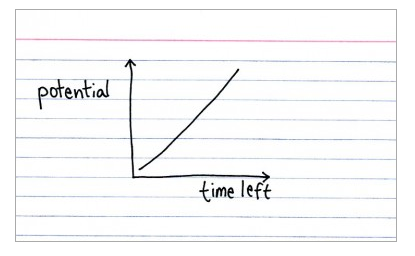
I’m of two brains on that point.

One of the things that I struggled with as an art student was the sense of ‘play.’ When I was doing my job? It didn’t feel like work – a great thing! But I also couldn’t quite figure out how to prepare for it, other than spending time in a practice room, doing as much research as I could, and trying to wear my creative heart on my sleeve. My family knew I was working, but I knew that they didn’t really understand or respect the training that I was saturated in: even my über-supportive dad called Eurhythmics my “Walking-And-Chewing-Gum Class.” (The fact that I got B my first semester? Well, that tidbit was brought up every time I got a little too big for my britches.)

Fast forward more years than I’m comfortable admitting: I spend more time doing work my family can wrap their heads around: spreadsheets and budgets and talent searches and hiring teachers and writing curriculum and proposals and grant applications. But the moments when I feel really energized at work are still those moments when I can think outside the box, lift restrictions, ask “what if?” and let my mind wander until it finds something interesting…when I can play.

I came across this article several weeks ago. In it, Linda Essig of Creative Infrastructure proposes that organizations do that very thing that I’ve been struggling with: to attack problems and situations (in this case, strategic planning) on two fronts: the analytical and the creative/emotional. Analytics and data are important in the life or an organization – but organizations are run by people, and we are some messy, messed-up beings, not easily squeezed into data sets or projections or strategic outcomes.

So, are you more creative/emotional? Or more analytical? Whichever side you identify more strongly with, I invite you to take a look over the neighbor’s fence and see what your opposites are doing…there’s always something to learn, right?

Tagged , , , ,

Gia-Ninh Chuang – From Singer-Pianist to Fitness Professional

Ok, Gia-Ninh. Let’s start at the very beginning (“…a very good place to start…” I think there might be a few musical theater asides in today’s profile. It’s just a hunch.)

Well, starting at the beginning does indeed start with a musical! The Sound of Music, to be exact. I was obsessed with that movie as a child, and went to elementary school knowing solfege! I attended a private elementary school affiliated with the Southern Baptist church in my town. My non-practicing Buddhist Mom and non-practicing Catholic father wanted me to be challenged, and even though it was a sacrifice for our family they opted out of the public school. I was a boy soprano – with super high notes – and no stage fright. I sang in the choir. I remember the first time that I realized that I enjoyed performing was during the Christmas pageant. I played the shepherd Jesse, the shepherd that was leading the 3 Wise Men to the baby Jesus.  It was the first time my entire family came to see me perform, and having that support and buy-in felt fantastic! (Full disclosure – some of my relatives didn’t really get the story… one uncle still calls me Jesse the King.) (Ed. -That will be a great WWF wrestling name someday. Keep it!)

When I reached middle school, I hit the opposite side of that fantastic performance coin:  my voice changed in the middle of a solo at the Regional Choir Concert. I pulled a total Peter Brady. It was traumatic! When the teacher suggested that I lip-sync for the rest of the school year, I was crushed and stopped singing. I had started piano lessons the year prior, and threw myself into practicing – hours a day, just because I enjoyed it so much.

When I hit high school, I got back into singing, and found a strong role model (more on her later) in my choir teacher. I accompanied people, started an a cappella group (back before Glee made it cool…we were called The Suspenders – get it??), made it into All-State. As I approached senior year and college I started thinking about being a choir teacher. I won a piano competition at the Peabody Conservatory, and it seemed like studying music was going to be my thing.

So, you went to school for music.

No.

You see, once I started preparing for scholarship competitions and such, I realized that it was going to have to be my livelihood. And that took much of the joy out of it for me. I was struggling a little bit at home, too… I was in the middle of my coming out process, and it was tough. So, I started my freshman year at the University of Maryland with a Psychology major, and a minor in Opera.

Well, those two things aren’t mutually exclusive. But when did your path change?

A pal of mine from the UMD Chorale was teaching aerobics classes at the campus rec center, and pretty much dared me to take a class. It was SO MUCH FUN, and I was instantly hooked.  I thought, “Wait, I could get paid for having fun like this?” Within a month I was enrolled in instructor training.

It allowed me to perform – which was something I enjoyed immensely – but it also allowed me to communicate with people, to translate concepts in ways that they could understand and use (which used the linguistic training I learned as a music minor). Plus, I was surrounded by music – the pulse of my classes was set to music, and having a strong knowledge of musical forms allowed me to customize my spin classes and aerobic choreography in a finely-calibrated way. So I switched my major from Psychology to Kinesiology.

Cool. What happened next?

I dropped out of school.

What?

Well, I was teaching full-time, in addition to my classwork.  But my passion for teaching and helping with my students eclipsed my academic goals.  And I won this big competition – the first ever winner of the AAAI/ISMA Aerobics Star Search in 2002… think American Idol for instructors.  I also had success in fitness competitions as an athlete.  I was 23, and suddenly had all of this visibility and momentum, and I pretty much thought this was my path. Heck, I was on Oprah and ESPN in the same year – if that’s not making it, what is? I decided to stop taking classes and ride that train.

But that certain path that I thought existed: win the competitions, teach great classes, give workshops at a conference, get a sponsorship, etc… well, that momentum started to slow down.  So in 2005 I went back to school. (Stay in school, kids…stay in school.)

When I was back in school, a pal told me that Equinox – a fitness company with a reputation for being the best in the industry – was opening its first location in the DC area. (Ed. – This is where I first met Gia-Ninh…I think it was a kettlebell class? I might’ve wept from the muscle soreness two days later, but I went back for more!) She suggested that I apply for the Group Fitness Manager position there. It was a great place to be – I taught, but I also used that psychology background to support and balance the diverse personalities of my instructors; I really felt that my job was to take care of my staff, so that they could do their best job.  And it taught me some valuable lessons about putting the success of my program and my instructors above feeding my own ego. It was both instructive and humbling.

So, from a boy soprano to a successful fitness professional…what skills or habits transferred?

You know, actually quite a number! A large part of singing well has to do with small, precise muscle coordination, and in fitness, you’re coordinating larger groups of muscles. Plus, both disciplines require a strong commitment to healthy living.  Both singers and fitness professionals ask their body to perform set skills on cue to do their job. Taking care of your body is taking care of your livelihood.

I referred to my high school choir director, Dr. Barbara Baker before, but I cannot overemphasize the influence she had on me, both professionally and personally.  There are several things that she said that have stuck with me through the years, the first being this:

  • The stronger your foundation (or, in musical terms, technique), the more you’ll be able to do, especially in less-than-optimum circumstances. Nerves, illness, they’re all things that performers have to work through… the key is to be able to do so without hurting oneself. I find that this particular message transfers tidily to my work in fitness, too – the better your form and technique, the more you can do and the faster you reach your goals without injury.
  • She also taught us humility, and to realize that we were just one part of a larger whole. No FIG JAM. (Ed. – Huh?) FIG JAM stands for “[expletive] I’m Good, Just Ask Me.”  Let your work speak for itself; everyone else will figure it out.
  • I was also constantly amazed at the ways in which she could ask us/inspire up to do more than we thought we were capable. Even as a fitness professional, my approach is about asking others to stretch themselves…don’t show them what you can do, show them what THEY can do.

What advice do you have?

Be nice. I’ve always wanted to be the guy who was amazingly good at his job, but that’s not enough; I want to also be the guy that people enjoy being around and is fun to work with.  When people want to work with you, countless opportunities to collaborate, learn, and gain exposure come your way.  Now, I’ve not always been 100% successful, but it’s something that I work towards constantly.

Protect your body. Being healthy and having a strong physical foundation in your discipline, lays the groundwork for making life easier and more enjoyable.

No FIG JAM. Don’t tell me how good you are, show me. No one wants to work with people who think they’re the better than everyone else.  It’s shorthand for staying humble and always thinking about how my decisions affect the people around me AND my own reputation.

Just do it. At this point in my career, I’ve taught over 15,000 classes. I take a huge amount of pride in the quality of my teaching, and also have found a deep confidence in that amount of experience.

Gia-Ninh has recently relocated to Idaho, where he is continuing his studies and maintaining a private fitness practice. For more information on him or his services, you can find him on the web at http://kineticedgefitnessconcepts.com/Home.html

Tagged , , , , , , , , , , , , , , , , , , ,

Thursday Link-O-Rama.

In a past blog life, I’d make lists of things that I stumbled across that were interesting and/or relevant. So, in that vein, I present The Inaugural Indirect Routes Link-O-Rama!

  • My fellow introverts? Proof that we know how to have a good time.
  • I tend to panic when I wake up (every night, ahem) at 2:30am, wide awake. This article says that maybe it’s not such a bad thing, and moreover, maybe I should leverage it for some real creativity.
  • The to-do list: more than an organization/procrastination exercise.
  • Creativity. Profanity. Beauty. Wayne White. Can’t wait to see it!
  • It might be heresy, but I wonder if we shouldn’t be thinking of work along these lines more often?

I’m in the thick of the annual talent search (a.k.a. the Dream-Crushing marathon), looking at student résumés and wishing that more of them were better proofreaders…I’m pretty forgiving, but the blatant typos are starting to wear on me. (I’m pretty sure Los Angels refers to the baseball team, and not the town…right?) Final passes for Cincinnati, Chicago, and Houston applications tomorrow, and screening for the home stand on Friday. But, most fun? (Boy, I wish sarcasm read better in print…) a big chunk of time spent trying to figure out exactly how many pennies we have for next summer and our best options for squeezing the most we can from them.

It’s easy work to do, until I try to do it thoughtfully and consistently…then it takes all of the time and brain cells I have. So, if you have brain cells to spare, or advice? I’ll take it!

Tagged , , , , , , , , , ,

Monday Morning, 8:38am

My usual weekday mornings look something like this:

7:00 hit snooze

7:05 get out of bed. Hope that I remembered to make coffee and set the brew timer before bed last night. If not? Coffee-making-time.

7:15 feed the cat and dog. Let the dog out.

7:18 caffeinate. wish for a faster coffeepot.

7:25 journal/write/doodle

7:35 skim email (and then wish I had waited until the caffeine truly hit) & google reader.

7:45 walk the dog

8:15 hit the shower, blow-dry, spackle

8:55 realize that I’m going to be late to the office. Again. Offer to pick up breakfast as compensation for being late.

I’ve read two articles recently on The Creativity Post about creativity. The first details the ways in which my morning routine might be the very thing that saps my creative thinking.

In a study published in the journal Thinking and Reasoning last year, researchers Mareike Wieth and Rose Zacks reported that imaginative insights are most likely to come to us when we’re groggy and unfocused. The mental processes that inhibit distracting or irrelevant thoughts are at their weakest in these moments, allowing unexpected and sometimes inspired connections to be made.

They offer more insight into the positives of non-linear thinking (boy, you know for a long time I thought that non-linear was a bad thing…I’m rethinking) by citing three things that can help with divergent thinking and building flat associative networks (i.e., being able to jump creatively around from one idea to another, loosely-associated one):

  1. Sleep.
  2. Humor.
  3. Alcohol.

Many major breakthroughs happen in the unlikeliest of places, whether it’s Archimedes in the bathtub or the physicist Richard Feynman scribbling equations in a strip club, as he was known to do. It reveals the wisdom of Google putting ping-pong tables in the lobby and confirms the practical benefits of daydreaming. As Einstein once declared, “Creativity is the residue of time wasted.”

If you’re like me, free time almost always becomes To-Do time; errands, chores, things I need to do/should do/ought to do. I’m pledging this week to take a little bit of time to let my mind wander: a half-hour at lunch without being strapped to a smartphone or iPad, a larger chunk of time to doodle in the morning, some time with a blank page and a glass of wine in the evening. I hope you’ll join me.

Happy Monday, all. Here’s hoping your week brings some lovely, surprising insights and ideas!

Peter Zimmerman – from Performer to Presenter

Peter Zimmerman is the Director of Programming for the Wolf Trap Foundation for the Performing Arts. He’s responsible for booking the majority of the 200+ shows that the Foundation presents each year in two vastly different spaces: a 7,000 seat outdoor amphitheater (The Filene Center) and a 375 seat rough-hewn jewel box (The Barns). Peter’s a colleague and friend, and we’ve talked often about his path…I’m excited to share his story with you today!

So, Peter; start at the beginning. When did you know that performing was your thing?

Back in the 3rd grade! I played the little drummer boy in my school Christmas pageant – I really wanted to play that drum! And I still vividly remember being on stage, the audience all looking at me… and thinking “I really like this!” I played instruments all through high school – was in the school symphony, played in the pit bands for the musicals, but I was really interested in playing in bands. I wasn’t really planning to go to college: I figured I’d gig for a few years and then be a rock star.

But you went to school – where, and why?

I went to Adams State in Colorado. I initially majored in French Horn performance – got a full scholarship through my H.S. orchestra teachers Craig Bailey and his younger brother Brent Bailey. I really explored everything I could in the arts, and found myself more drawn to the acting side of things. It got to the point where I lost my scholarship because I wasn’t participating in any of the ensembles – I was taking Shakespeare and acting classes (as well as the education requirements that my mom insisted on), and they became my priorities. I was awarded a B.A. in Theater Arts, Speech Communications, Secondary Education and Music. (Editor: Please tell me that it took you more than 4 years to do all that!) I did it in 4.5 years.

Incredible! So, then you’re out of school. What were the Seven Stages of Peter’s Career? (Ok, that riff on the Seven Ages of Man didn’t quite work…forgive me.)

Well, my first gig was as a gravedigger – an important first experience for any arts administrator. (Editor: Seriously? That explains a lot…) I taught for four years in public high schools in Colorado and took the summers to work on my own artistry. I was part of the IATSE crew for the Denver Theater Center, but also acted in the ensemble. (It was a repertory company – talk about learning how to multi-task and prioritize!) Eventually I moved to New York, mostly because I wanted more visibility in Denver, but was told I had to go to NYC to achieve that. I lived there for 2 years and acted – film, tv, stagework, touring -with some real success. But I had some hesitations. My physical type was really common, and I wasn’t a triple threat the way my competitors were; it was going to take a whole lot of work to get me to the next level. And I had a three-year old…the schedule was making it really difficult for me to be the kind of father that I wanted to be.

So, how did you make the jump from acting to presenting?

Remember this: never burn bridges. My student teaching supervisor from college, Ken Foster, and I kept in touch throughout my public school years and my sojourn in New York. That connection got me my first presenting gig, at Penn State, where Ken headed the department. I started a little bit at a time, at first throwing myself into implementing Ken’s vision, and eventually to bugging him for more responsibility. He let me create a children’s theater series – and actually witnessed one of my biggest flops…Peter and the Wolf…don’t ask. He gave me the freedom to succeed OR fail – he was both a safety net and a sounding board, but if I didn’t seek it, it wasn’t forced upon me. And, even after the Peter and the Wolf fiasco, he never chastized me – just asked me what I had learned from the experience.

I cherished his mentorship – I stayed at Penn State for 9 years. I found that I could still be involved in the theater, but could also have the stability I needed in order to have a family.

Heck, I can’t imagine leaving – what could’ve been better?

Well, actually, there was something! I took a job as the CEO/Executive Director of the Colonial Theater in Keene,  New Hampshire. (Keene had been a big town during railroad heyday, but when I was there the population hung right around 60,000.) It was a beautiful small vaudeville theater with a lot of character, and interesting programming – The Kinks, Little Feat, the Smothers Brothers, all acts that I got to know when I was there. I LOVED it. It fit all of my skill sets: raising money, grant writing for 2 successful capital campaigns for theater and marquee renovations, presenting live acts and film. We increased our staff and our budget was in the black, so I think I was good for the theater, but the job was great for me, personally, as well.

OK, now I’m totally stymied: were you looking to leave the Colonial? How did you end up at Wolf Trap?

Actually, it was a personal ask from (Wolf Trap President & CEO) Terre Jones. Through some common acquaintances and a star-crossed raffle at APAP,  we got to know each other. It seemed like time to take a risk, to step up. And it was a good move – I’ve been here for almost 14 years.

What aspects of your current job/profession give you the greatest satisfaction?

I am a fan of the deal. There’s a price on my head for how much I have to book, how much money I need to make for the organization. Confirming a booking gets me jazzed – closing a deal and following through to completion is the best feeling. Speaking honestly, however, there are lots of amazing acts that get away – probably two for every one that actually takes the stage.

I also loved teaching – I feel that impacting young people is important, and I get a lot of professional satisfaction from mentoring. If I had to go back to teaching at this point, I think I’d love it!

And I’d be lying if I didn’t admit to getting a bit of a rush from being one of the folks that has access to some of the best performers in the world. There’s a status that’s accorded the level of access that I have, and while it’s not the whole picture, I still feel pretty awesome when a performer that I respect calls my cell to say hi.

Indeed! I’d kill for a few of those numbers, myself! So, it’s advice time. What words of wisdom do you have for the next generation?

Make connections: there are geographical ramifications to this business, and it can be hard to advance in the same geographic/organization. Extend your network!

There’s weren’t any Master of Arts Management programs when I was starting out, so I’d recommend talking to a talent buyer who’s in their mid 30s-40s to get the lay of the land. And examine the differences between non-profit and for-profit companies – the cultures are very different, and the goals are as well.

Find out how your current skills overlap with the job you want. For example, I learned budgeting and marketing when I was gigging in college…from there it wasn’t so hard to parlay that into production schedules for my educational theater productions or to Penn State or the Colonial. I learned time management when I was working that rep/IATSE job at Denver Theater Center. It all transfers.

I’d also learn how to say no. In my business, ‘no’ is the 2nd best answer. (‘Yes’ is obviously the best!) Maybe is my least favorite word – decisiveness saves time and money.

As I said before, don’t burn bridges. No matter how crappily you’re treated, suck it up. I have a million stories from colleagues across the nation to back that maxim up, but it bears repeating. Show up early. Stay late. Make yourself indispensible to your superiors

Tagged , , , , , , , , , , , ,

Profiles, from another angle.

I am a big fan of Lifehacker. I get it delivered to my inbox, and make a habit to scan the whole thing before filing (yes, filing…sending them to the trash would be akin to throwing away gold on most days.) it away for future perusal.

They have a great feature that’s called How I Work. In it, they feature profiles of interesting, creative people like Maria Popova and Christopher Jobson, and track the ways that they use technology to make life easier, their secret abilities, and the best pieces of advice that they’ve received. (I am a big fan of Maria Popova’s Best Advice. Sometimes simple is indeed the best.)

I invite you to hop over to Lifehacker for some words of wisdom (I’ll be spending some time with this), and then join me back here tomorrow for a new Profile Phriday. (This week? My pal and colleague Peter Zimmerman, a reformed-performer-turned-talent-buyer.)

originally viewed on Colossal (www.thisiscolossal.com)

Tagged , , , , , , , ,

Monday Inspiration

Again, Jessica Nagy of Indexed totally has my number. (Today’s example is this graphic, “Not Just for Kids”)

As does Bikram Choudhury.

“Never too old, never too sick, never too bad to start again.”

Indeed.

What would you start, if you thought you could?

Tagged , , , , , , , , ,

Tom Wright

This week we’re talking with Tom Wright, the Director of Artistic Planning for Vancouver Opera. I met Tom during the Opera America Leadership Intensive, and it’s true what you’ve heard about Canadians being amazingly nice – Tom is a great guy! But even though his path has been consistently in the arts, he’s taken an interesting twist or two during his career. Here’s his story:

Ok, Tom. It seems like almost everyone I talk to started out as a singer. Are you a reformed performer?

Well, when I was in school I was musical – as a child I played violin, cello and piano. But I was really a theater guy. All through high school I was involved in technical theatre, setting up sound and lighting systems for everything from assemblies to full productions of musicals and plays.

Between grade 11 and grade 12 my high school (Handsworth Secondary School, North Vancouver, B.C.) granted me a scholarship to attend the Banff School of Fine Arts in Banff, Alberta, Canada. Banff is a beautiful town in the Canadian Rocky Mountains about two hours west of Calgary, Alberta. The Banff Centre (as it is called today) is a long standing campus of training in all aspects of the arts, including the dance, theatre, music, opera, literature and visual arts.

I went to the Banff Centre with hopes of becoming a lighting designer. However, after the first month of the program I realized that I was slightly colour blind; so I started exploring other options. 🙂 I then turned my attention to learning as much as I could about all aspects of technical theater: costumes, make-up & wigs, electrics, sound, scenic painting, carpentry, and stage management. After my first summer in Banff, I realized the stage management was something a really enjoyed. I went back to the Banff the summer after graduation from high school and was placed on the stage management team of the opera.

Ok, so after graduation you must’ve found your way back into the opera field. 

Yes! During the summers of 1986 and 1987 when I was back in Banff,  I was involved with Colin Graham’s productions of Falstaff and Eugene Onegin. They were probably the two defining projects that ultimately pushed me into opera.

After the summer of ’86 I received and offer to work at Calgary Opera starting as an Assistant Stage Manager…long story short, I was there until 1998, when I had been promoted upwards to be their Director of Production.

My boss was then head-hunted for Arizona Opera and he asked me to join him. In Arizona, I was the Director of Production & Artistic Operations. However, in the first years I also oversaw a massive IT overhaul of the company where I implemented a wide area network between the Phoenix and Tucson offices. (Ed. – we have difficulties producing in 2 theaters that are .5 miles apart…I can’t imagine the logistical planning that must go into producing in two different cities!) When I left Arizona for Vancouver Opera in 2007 I had spent 9 years running the Artistic and Production operations of a company producing 5 operas a season in two cities completely double cast. Whew!

What is your current profession?

I’m currently the Director of Artistic Planning at Vancouver Opera. I oversee all Artistic, Production and Education programs/operations for the company.

What aspects of your current job/profession give you the greatest satisfaction?

This year’s launch of the Yulanda M. Faris Young Artist Program is a very satisfying achievement. I have been developing and implementing this program since I started here five years ago.

Well, to totally date myself by quoting a Virginia Slims cigarette ad, ‘You’ve come a long way, baby!’ Any regrets?

I do regret not continuing my music studies as a child but I was bit with the theatre bug and sports in high school and dropped music. Also, sometimes I feel that I should have gone to university to advance my education, (Banff Centre is not a accredited college or university so no degrees or certificates are awarded.) but in the end, I have always been employed in the arts, so I can’t really complain.

I’d say not! 🙂 But that’s a lot to figure out on your own…did you have a mentor?

My mentor was Colin Graham, first Artistic Director of the Opera Theatre of St. Louis and Program Director of the Opera program at the Banff School Fine Arts (82-88) He was the director of the opera program and it was his mentorship of me that brought me to where I am today. He took my love of theatre and my passion of music and really taught me about the beautiful marriage that happens with this in opera.

Advice time: what would you tell a student struggling with his or her career path?

Move forward with whatever makes you smile and make sure you have a passion for it. Passion, desire and love of what you like to do is really all that matters. I hope that students who are thinking about their futures, who have a passion and drive in a certain field, will see that it is possible to be gainfully employed in the arts. Passion, drive, networking and a bit of luck is what has taken me on my journey thus far.

Tagged , , , , , , , , , , , , , , ,

Killing Dreams


We’ve entered a very specific part of my yearly work cycle. Sure, we’re prepping for the audition tour – finalizing flights and hotels, confirming appointments with director and conductor candidates – but the majority of those things are already completed, thanks to our Company Manager from the summer, Roxanna.


The harder part? Application screenings.


We receive over 1,000 applications each fall for our two tiers of performers: the Filene Young Artist tier will be those singers who have established themselves as ready for a mainstage freelance career, and when we find them we’ll program a season especially for them – to showcase their unique strengths. The Studio tier will be folks who are in undergrad or are first years masters students who demonstrate talent and success in their training up to this point, but who may not have had the opportunity to hustle through a professional production period or figure out what their career landscape might look like for the next 5-10 years.


We don’t ask for recordings anymore, as the technology allows for enough sweetening of the sound to make them marginally helpful at best, truly misleading at worst. Both tiers submit applications and résumés, with the Studio tier needing to fill out some very basic essay questions.


The deadlines for Seattle, San Francisco, and New York City passed earlier this week. So I’ve been spending some quality time with those Studio applications and résumés. It’s the most difficult time of year for me – how do I weigh the potential of a senior in an undergraduate program that maybe doesn’t have a mainstage production every year against a singer who didn’t/couldn’t finish their undergrad but has cobbled together some small roles at tiny regional companies? And, having been a singer myself who sent in my applications and was rejected, my heart gets soft at this time of year, wanting to extend those audition offers to as many people as I can… but sadly, the math simply doesn’t work that way. There’s aren’t enough hours, so I have to eliminate folks from the running, before I even hear a note.


This whole thing weighs pretty heavy on me, and I tend to whine a bit on Facebook about it. A pal – one with whom I used to sing – weighed in and said:


“When one door closes, another door opens. Sometimes we spend way too much time knocking on doors that turned out to be the wrong ones. I should add that my own wrong doors have been closed many times in the past by people just like you and I’m still your friend and I’m telling you it was a GOOD THING! I’m grateful I didn’t go down that path now that I’m here looking back. So, since I can’t go back and thank all those people cause that would just be weird, I’ll thank you on their behalf. It’s the right thing to do.”


It made me feel better. In hindsight, my own experiences – painful as they were -helped me to distill and clarify exactly what it was I wanted to do. And while I hateHatehate spreading bad karma around, maybe I’ll try to reframe this part of the year…not as spreading bad karma, but as gently closing some doors so that people can notice the open ones…


I’ll be back tomorrow with a new Profile Phriday post – I hope you’ll check back!

Tagged , , , ,

Saturday Musings

I’m writing this from my porch, on one of my final days of vacation leave from the office.

Our season is usually a pretty intense one, with long days and weeks that run together. I find that the odd free day that we get is usually completely spent on surfing email and voicemail messages for emergencies (which always seem to happen on company days off…Murphy’s Law, I suppose), doing laundry, and trying to regain a sense of normalcy with my little family. I know that I’m not alone in navigating the thin line that has become the border between work and home, especially in the arts when so many of our ’employees’ and ‘colleagues’ are also close personal friends.

So when I happened upon this article from the Harvard Business Review (granted, while sitting in a rocking chair on the porch, while wearing my favorite par of yoga pants and drinking my third cup of coffee), it made me pause.

One of the reasons I loved music in the first place – the making it more than simply listening in my own case – was that it could very easy get me into a place of flow, where I could lose whole hours exploring, refining, creating. When I started at my current position, the assimilation of new tasks, responsibilities, social morés all contributed to a similar feeling – staying on top of the game, trying to find ways in which it could be made better.

By the end of the summer? I’m just hoping that I have enough clean clothes to make it through the last performance without offending anyone, and enough brain cells to make sure I talk to the right folks, get the books closed properly, and get next season’s budget and NEA applications submitted. It’s a drastic change of perspective, and not a wholly welcome one.

But here, at the end of a full week away from the office, with very little traction with goings-on, I’m starting to feel re-energized. Like Tony Schwartz, the author of the HBR article, I’m reminded of how much we need time to recharge, to wipe the slate clean…and how, when we allow ourselves the time and space our mind naturally returns to those passions in an organic – and exciting – way.

If you’ve not had the time/inclination/ability to separate yourself from your job for a little bit of mental R&R (and, for the record, I am a HUGE fan of the Staycation.) I hope you’ll consider unplugging for just a little bit. (And if you can’t get away, Lifehacker has a Paleo Media Diet that should help you with clearing out the cobwebs in the attic and all of those archived mental emails.)

20120908-130828.jpg

Tagged , , , , ,