Jennifer Empie – Flute Performance to Foreign Service

JENNIFER EMPIE

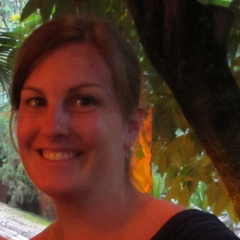
Jennifer began her studies as a Flute Performance/Music Industry major. She currently works for the U.S. State Department, and is posted in Rio de Janeiro. Here’s her story.

First Steps

I went to a very small high school where the fact that I pursued music at all made me pretty much the most musical person in school.  My teachers all convinced me that I had to major in music in college and that I should become a music teacher.  No one ever introduced me to other options so, without any real guidance, I decided on music education.

When I entered college I soon realized that there were many more careers in music than teaching and I still wasn’t sure I was really cut out to be a music teacher.  Syracuse University had a good music industry program and I decided that major would give me the most options so I changed to it.  The only problem was that the program focused mostly on popular music management so even though I really enjoyed the coursework, it still didn’t quite fit.

I interned at the Royal Philharmonic Orchestra during my semester abroad in London.  This was the first time that I learned about the existence of education programs in arts organizations.  I really enjoyed working with these types of programs and decided to pursue education again and would look into graduate schools when I got home.

I thought I wanted a masters degree in music education (as I still hadn’t learned about arts administration programs).  I’m really thankful for my friend Andy, who was a graduate student at Syracuse, for knowing what I needed and setting me up for it before I knew myself.  He encouraged me to go to Florida State University because he went there and they had a great music education program.  He also arranged for me to get an assistantship in the Arts Administration program office where I would get to do things like manage the summer music camps and get to know the Arts Adminstration staff and students.  As he expected, I realized that was where I belonged and switched my major to Arts Administration. That decision really set me on the path that, though winding, led me to my career with the State Department.


Life after Grad School

After graduate school, I moved to Washington, DC for an internship with the National Symphony Orchestra at the Kennedy Center.  This was a great introduction to the practical world of arts management.  The Kennedy Center is an interesting organization because it is so large and in some ways has an incredible amount of resources while individual departments still have very small staffs and you have to be creative to get things done.  I liked this grass roots aspect under the umbrella of a large organization.

After that, I decided to stay in Washington, DC and began looking for a job.  This did not turn out to be as easy as I thought!  After a lot of searching, I accepted a position in the Artistic department at Washington Opera.  Although I would never admit it at the time, I had never seen an opera before and had no idea what an Artistic department does!  I quickly learned about auditions, casting, and contracts and soon fell in love with opera.  A year later I was managing the Domingo-Cafritz Young Artist Program where I was responsible for the daily training and rehearsal schedules, production, budgeting, and planning.  Even though I was not a singer, I learned everything I could from my opera colleagues and relied on advice from those more expert than me every day.  This taught me that you do not have to stay in your comfort zone.  What you know can apply to a lot of different things.

Although I would not trade my six years at the Opera for anything, I never felt that the arts were the only thing for me, the way many of my colleagues did.  I knew I needed to do other things in my life and there were aspects of arts management that were starting to negatively affect my life.  I was working for very low pay, which added stress to my life, and I was working very long hours, rarely getting even a day off on the weekend.  This takes a toll after a while.  I wasn’t sure my music background really qualified me for much else so I went back to school part-time to get my MBA.

Studying business at the University of Maryland was a great opportunity to meet people who had a wide variety of careers.  I learned about things like finance and business strategy and found a world of new opportunities.  In the end, I landed a position in supply chain at Black and Decker.  I was thrilled to work for a large corporation that I expected would offer many more opportunities to learn, try new things, and travel.  Unfortunately, my timing was a bit off.  I entered my job in 2007, just as the economy was taking a downturn, and suddenly I was faced with the same pay cuts, layoffs, and lack of mobility that I faced in the arts.  At the same time, I realized that the culture of the organization is just as important as the work and I did not fit into this culture.

So, where did you fit in?

I had always had in my mind that I would like to join the Foreign Service with the Department of State.  I loved the idea of travel, learning languages, living abroad, and working in international affairs.  So in 2009 I took a shot and was fortunately hired!  Since then things have fallen into place so well that I know this was exactly the right decision for me.

I now work as a diplomat with the U.S. Department of State.  I am currently posted to Rio de Janeiro where I work in the consular section, processing visas and working to help American citizens abroad.   In my first year, I have had amazing opportunities including being interviewed for national TV news (in Portuguese!) and organizing the motorcade for President Obama’s visit.  My future jobs could focus on a variety of areas including operations, reporting to Washington about issues in that country, or public affairs.  Next year I will move to Seoul, Korea.

The thing I love most about my job is the people.  I am surrounded by interesting people from all different backgrounds who are all very happy to be here.  This does an enormous amount for morale.  Because we all came from different backgrounds, there is no assumption that one person is more qualified to be here than someone else.  So we are all given a lot of responsibility and trusted to make good decisions.  The work is never boring – embassies and consulates are involved in so many areas that something new and exciting is always coming up.  Finally, I am confident that that I have a career path ahead of me.  This is the first time I have ever been in a place where I know I will not have to send out resumes every year to find the next opportunity.

Definitions are overrated

The unforeseen positive was that giving up performing allowed me to redefine myself.  I had always defined myself as a musician and I clung to that for a long time but now I could allow myself to be defined as more than only that.

When I was at the opera, I always felt the need to define myself as a former musician in order to justify why I would be qualified to work in Artistic or the Young Artist Program.  When I moved to the business world, people tended to see music as irrelevant to my work so I started to say that I came from the non-profit world, rather than the arts.  The Foreign Service is, by nature, made up of people who come from all different backgrounds.  Diversity is embraced so I have no qualms about saying I came from the arts and studied music.  At this point, I have not performed in a very long time so I do not define myself as a musician anymore.

Personally, I see it more as a path that a destination.


I don’t want to define myself as a musician, or arts administrator, or business person.  I like the idea of doing lots of different things and being less defined by my job, although it is very fun to write “diplomat” on my tax return.

Toolkit: what skills carried through to your current position?

Music training is great for all professions.  It taught me discipline, creativity, and commitment.  Arts Administration taught me resourcefulness and flexibility.  You are always being asked to do things you have never done before and you just have to figure it out.  The standards that I was held to (or held myself to) at the Opera were far greater than anything that was expected of me or my colleagues in my for-profit position.   Working in the corporate world, I was really surprised at how much stronger my work ethic was that that of many of my colleagues.  Working in the arts, we are used to putting in as many hours as it takes and sticking to deadlines- once you announce the date of the performance, that is the date.  The Department of State actually has a lot in common with the arts.  Although the Department itself is huge, I work for a small consulate with limited staff and budget and we are always trying to creatively accomplish more than we realistically have the resources to do.  Every day I draw on the foundation I built during my time in the arts.

 Any parting shots?

Even if you are convinced that you will always have a career in the arts, learn about more than just music.  You don’t know where life will take you.  When I explain my varied career path, most people think it makes no sense but to me, I know I needed to take each one of those steps to become who I am now and get to where I am.  I do regret closing my mind to things non-music when I was younger.  I should have learned more about other disciplines and maybe studied a language.  By the time I realized how important that was, I had a lot of catching up to do.

You can only consider the options you know exist.  Talk to lots of other people – performers, former performers, non-musicians – and find out what they do and why they like it. Most importantly, no decision has to be final.  You can always change directions later.  But don’t turn down opportunities to learn something new because you think it is not relevant now, it may be later and in the end, everything relates to everything.

Tagged , ,

Charisma

As performers (and, perhaps more truthfully, auditioners), we all have ideas about the image that we project.

We’ve been coached by teachers that our audition begins before we even set foot in the room. We know that, in order to give our best audition that we need to be fully prepared. We know that it’s our job to make a connection with the panel somehow, and that, more importantly, that connection needs to be positive.

We visualize walking into the audition room: entering with confidence, greeting the panel, discussing rep with the pianist. We visualize how that first piece will go, how that wild-card second piece (because they will naturally ask for it) will somehow be even better than the first. We see ourselves leaving the room feeling good about our performance, the reactions of the panel, and our future prospects. We know that running through that scene in our heads and filing it with positive value will help us give stronger auditions.

And even though our hearts may be busted if we don’t get the job, we know that that impression that we’ve made on the panel will follow us, making things easier or harder in subsequent auditions. It’s the reason we celebrate a good audition in addition to a job offer: because the audition is important; and the way we present ourselves, personally and artistically, is as important in the audition room as it is onstage.

These visualization techniques are one of the Jedi mind tricks that author Olivia Fox Cabane cites as a way to improve one’s charisma. In an interview for Fast Company, she talked about the several types of charisma that exist  (focus; visionary; authority; kindness), and how one might cultivate those characteristics. (I for one was pretty excited to find that introverts can excel at developing focus charisma, as it calls for blocking out everything save for the person with whom you’re talking.) She talks about the ways in which charisma is essential for building businesses.

And I have to say that, of the performers I know? Well, y’all are not close to being short on charisma.

Take this as just one skill that, while it might not show up on your resume proper, will help you through this professional journey.

Discernment

I’m a sucker for to-do lists, and maps to get from point A to point C in the most efficient manner.(Looking back on my own path, it’s part of the reason why classical music appealed so much to me: there was a seemingly tangible, organized trajectory to get from music student to professional opera singer. When that started to not quite be the case, well, part of the attraction fizzled.)  But, as I’m learning (yes folks! SHE CAN BE TAUGHT!), a pre-prescribed path doesn’t work for very many of us. It’s easy to be reactionary, to make a choice – or a whole series of choices – based on external factors: what I should do, what pays the most, what my family will have the most respect for…the list goes on.

But it’s difficult to talk about discernment.

We struggle to talk about feeling unfulfilled (especially when family and friends are supportive of our talents), we worry that talking to people about wanting to change careers could hamstring us if we ultimately decide that performing is our thing. We struggle to find the time and space to soul-search, to ask questions and really listen to the answers. And we look at our resumes and wonder if we’d ever be able to make a transition, even if we wanted to, with the plethora of stage credits and comparable lack of office/teaching/business experience.

It’s an extremely personal process.

And, like most large projects, it’s better divvied up into small chunks. (One of the beautiful things that tends to hamper we creative folks is that we rush right to the end result in our heads, and decide whether or not it’s going to work before we’ve even begun the journey. Or maybe that’s just me?)

This article very quickly combined my love of lists with a succinct small step/big question discernment exercise. Three steps, maybe thirty minutes of your time.

  1. What do you want?
  2. Dive into why you want it.
  3. Gain information and momentum.

Even if you end up with more questions than you started with, you’ve at least started the process, right?

Tagged ,

Joseph Craig – Painting to Programming


Joseph is a software engineer who started his career as a visual artist. Here’s his story:
I started my undergraduate studies at Edinboro University in Pennsylvania. In high school I had enjoyed drawing and painting , and had an influential teacher Bobbie Russell – who had attended Edinboro and who encouraged me to develop my talents. I earned a BFA in Fine Arts/Applied Media Arts (Graphic Design).
So, happily ever after, easel and all?
Here’s the thing. I struggled with the client-artist relationship. For example, shortly after I graduated, Coors came out with a campaign that featured geometric shapes in pastel colors…and most of the people that I was working with wanted something that echoed that (at the time, very trendy) campaign. I realized that art was so personal for me, that I couldn’t – and wouldn’t – subject my work to the whims of others.
What was your next step?
After graduating, I entered a limited placement  business program, trying to find what I liked. (I eventually earned my MBA and also an MIS) with a specific focus on marketing. I surprised myself – the math and business classes came much easier than I thought they would. As part of the curriculum, I had to take a software class. The professor teaching that class, Father Dave Cottingham, saw my potential and placed an extra effort in introducing me to the computing world. It was there that I found my niche. You see, there’s a large amount of graphic design involved in developing user interfaces – especially in web oriented applications. So, I’ve been able to use my knowledge both in designing user interfaces, and in communicating with the graphic artists hired to design those interfaces.  I think the combination of having a strong Foundation in both Design Principles and Software Engineering is  important.  Often, Graphic Artists learn programming to design user interfaces or programmers try their hand at design.  To have had a solid background in both provides me with the skill sets to communicate with both to better relay what is required and to understand the walls they may be running up against in a project.
I’ve found that I really enjoy analyzing business processes and transferring those manual processes over to software.  For example, I consulted for a bank which had a complex system of meetings interspersed with printing out documents and sending them up a chain of approvals before they could provide a loan to a corporation.  I worked to automate that process where the documents were instantly available to everyone, they could comment as needed and the chain of approvals was controlled so that it couldn’t go to the next level of approval until prior requirements were fulfilled.  The project incorporated analytical skills while providing a measure of creativity in addressing addressing user needs, which I really enjoyed.
Loaded question: do you still make art?
I do! Actually, the most positive aspect of switching careers was that I was still free to do MY art while pursuing a career that I enjoyed and paid well. (Although, I found that I didn’t spend
as much time as I envisioned doing painting, which I’ve corrected within the last year and a half.)
(Editor: I’m looking forward to a Joseph Craig original for my walls!)
What advice would you give to someone struggling with their professional situation?
Don’t worry about making the wrong choice.  Instead, focus on finding the right career path.  Just because you have a degree in one field doesn’t mean you need to limit your career to that field.  The switch may be daunting, but, in the end, you need to be happy doing the work you do.  If you really want to be involved in a specific field and find it isn’t for you, look at careers that incorporate elements of that field but are more suited towards your strengths.

One of the fabulous things about starting this project is poking around on the internet, and then suddenly falling down a wonderful rabbit hole, full of insight and perspective. I was groping around (thanks, Google) for one of my favorite Goethe quotes:

Whatever you can do or dream you can, begin it. Boldness has genius, power and magic in it. Begin it now.

And I ran across Sarah Peck.

Her corner of the web is full of articles about purpose, about connection, about the very things that make life and work meaningful. This particular article is about taking action, making a decision.

We’ve all been at that spot, whether professionally or personally, when we need to make a decision. And we realize, even if for just a fleeting moment, that not making a decision is in fact still a decision.

There are times in our lives when those decisions are exciting, energizing. Other times when the simple need to make a decision is utterly defeating.

Sarah has two recent articles that are worth their weight in time (because, honestly, time seems more valuable than gold in the current market) that I’d recommend to you.

  • The landscape of work is indeed changing. Some food for thought here.
  • Action. Resolve to take action.

It’s Wednesday. Midweek. Is there a better time to act boldly, in this low trough between weekends?

I submit, there is no better time.

Monday musings -classical singing edition

I’ve been thinking, maybe a little more than I should, about the education of singers.

Now, I’m far from the first person to think that undergraduates are underexposed to the realities of making a living in this field: the advanced degrees needed, and the corresponding debt. The fiscal realities of a freelance career. The inherent biases in the industry. The challenges to sustaining healthy support systems. The tricky nature of telling your non-industry significant other that you need to kiss someone else ‘professionally.'(Several times. For practice.) The inevitable reality that, even though you’re not making enough money to both pay your student loans and live, you still need to file and pay taxes on all of those 1099s.

And, while I realize that the collegiate programs need to educate the students as to how to be artists, I feel that they have a responsibility to also let these fledgling artists know what they can expect upon graduation.

Let’s face it: a student entering law school or medical school can guesstimate their income post-graduation, assuming everything goes well. But singers are shown examples of those who have succeeded, those with big contracts, with some earning heft. They’re not shown the adjunct faculty member who is toiling at their craft and producing the next generation of artists, but is earning at or below the poverty level…the freelancer whose medical condition necessitated a ‘real job’ and the corresponding insurance…the performer whose personal life disintegrated over a showmance. Or, when these ancillary stories are told, they’re framed as cautionary tales…”don’t let this happen to you, kids. Work hard, make art, live your dream!”

I submit for your approval the ideas that conservatories should be choosier…that artists should be given tools for both art and life…and that opting out of a performance career is not something of which anyone should be ashamed.

Discuss.

Evaluating/Re-evaluating

So, maybe you’re perfectly happy in your current profession, and read this occasionally just to check in or read a profile (Hi, mom!). If so, then read on, and thanks for coming!

But if you’re dissatisfied in some way, but not sure whether it’s worth making a move? Well, that’s a more difficult spot to be in, for sure.

And if you’ve decided that you need to change things up but haven’t the slightest idea of where to go next?  Well, circumstances can dictate that you take the first thing that comes along, rather than examining what you want to do/who you want to do it with.

I offer, as some food for thought, some reading:

  • Chris Guillebeau from The Art of Non-Conformity posted this graphic from Sarah K. Peck. Simple questions, but your answers might surprise you.
  • This article from Inc. by Jeff Haden about what makes a remarkable employee. In what kind of professional situation might this describe you?
  • Danielle LaPorte talks about clarity, and trusting your gut over your head.

Some big thoughts for a Sunday morning.

Melissa Collom: Finding Value on Both Sides of the Footlights

Melissa Collom earned a BFA from Carnegie Mellon University in Vocal Performance; she currently balances work in the non-profit and political arenas with an active performing schedule. Here’s her story.

How did you get started?

Like many American kids, I grew up with musical theater and imagined that as the goal. During high school my voice teacher, Sara Callanan, encouraged me to try to some classical music and arias. So, motivated by positive feedback and encouragement, I gradually spent more and more time doing classical music. In high school and college I had some great moments on stage when I felt like I could hold the attention of everyone in the room, sometimes even make them laugh or cry. It was an extremely powerful and addictive feeling!

So, why the change?

I had been doing “day jobs” between singing gigs for many years, but this was one of the first that was really meaningful and rewarding to me. Suddenly I felt like I was contributing to a cause that was (much) larger than my own vanity, which is what trying to be a singer can sometimes feel like. Then, in 2008, I had a major (non-singing) health issue. Since then I have needed the stability of a job that provides good health insurance and steady income.

I currently manage the college intern program at the national headquarters of Planned Parenthood Federation of America, though I have had a number of different jobs with the organization over the last few years. Since my focus is on students and young people just beginning their careers, my experiences as an opera apprentice definitely inform what I do. Also, working in politics and political communication can be so much like show business that it is truly disturbing! I love the feeling that I am contributing in a substantial and meaningful way to some of the major political and cultural battles of our time. And I know that my background in performance contributes to the work I do every day.

Letting go of the “opera singer” label was not particularly difficult for me since I never really felt like I fit the opera singer mold. My transition from performing to non-profit management has also been so gradual that I often feel like I’m still working out the balance between these aspects of my life. I feel great about the work I’m doing, but it has been very important to me to seek out creative projects and opportunities to flex my singer muscles from time to time. I can’t believe how much I miss singing if I am not working on some kind of musical project.

Any advice?

Perseverance has to be its own reward if you want to continue pursuing a performance career. Other careers have a lot of other rewards. If you see opportunity for yourself in another field and enjoy the work, don’t feel guilty about following where those successes may lead you.

Both in music school and on the “young artist” circuit, I found the dialogue around performers making career changes to be very negative: we often hear about “failed” careers when people have transitioned into other kinds of work – even if it’s great non-performance work in the same field. I wish we were more supportive of each other and better about measuring the success of a good education by how people employ their knowledge, regardless of where they apply it.

Put on your HR cap: why should a hiring manager consider employing a performer?

Here’s what I would say are some of the main strengths a performer brings to the non-performing world:

First and foremost: Speaking in front of a group. My colleagues constantly compliment me on speaking and presentation skills. Holding the attention of a group of people is a key thing you learn as a performer and singers obviously have great voice projection. I also feel like my time on stage has made me responsive to the timing and flow of holding a group’s attention. These are huge advantages in the workplace where many people truly don’t know how to speak up. I don’t even have to think about it!

Second: Taking direction. We work with a lot of (sometimes crazy) people in the music world. We get input from many sources and learn how to prioritize that information and incorporate it quickly.

Third: Event planning is really stage management. If you’ve worked on any backstage aspects of a performance, you can apply those skills to conferences, events, rallies, etc. because you know how think through who needs to be where and what they need to have with them at any moment in the process.

Finally: Juggling multiple tasks and dealing with competing priorities. If you’ve been a freelancer even for a brief period, you’ve been the CEO, CFO, Marketing Director and everything else for your own company. If you can keep track of all of the different elements of a performance career, it’s likely that you can sort out a project to determine what needs to be done, when things need to happen, and make sure that nothing slips through the cracks.

At my organization we happen to have a temp agency contact who is a former opera singer herself and frequently staffs us with opera singers at various stages of their careers. (She got me my first assignment here four years ago.) When the need arises, I always call her first because the singers she sends us are well-educated, highly motivated to perform well, and able to adapt quickly to a fast moving work environment.

It can be a tough sell to get employers to a see a music degree as a plus on a resume, largely because most members of the general public have no idea what being an opera singer really means. Once the performer is on the job though, they usually hold on to them as long as they can!

For Monday? A little bit of inspiration.

For those readers firmly entrenched in creative lives, and for those who are clamoring in some small way to reclaim some lost ground, David at Raptitude has a great post in which he begins with a quote from Ira Glass and segues into some serious insight:

Your taste is why your work disappoints you.

It explains why people quit even when at one time they really saw how good they could be.

We all have been on the difficult side of art-making…and perhaps the scared side of art-making. And definitely on the tedious, will-it-ever-be-good-enough side…we’ve all been there.

But regardless of where you are in your journey? Maybe today is the day to pick up the reins again in some small way, to dip your toes back into the water.

(I myself am committed to doodling through at least one meeting.)

James Lynn – from Singing to Security

James started his professional life as an operatic bass-baritone before finding himself happily ensconced in Richmond, Virginia working in the insurance industry. Here’s James’ story:

Low Voice, Big Opportunities

I started singing, and being recognized for doing so, while I was in high school. A teacher, Lee Hanchey, recognized my talent, and directed me towards a local voice teacher, the late Martin Strother, who at the time taught at Virginia Union University. I had a lot of support in high school. My first big validating moment came at a chorus festival – I won an award for a solo that I performed. I was pretty shocked; at the time I didn’t even know there was such an award.

After high school I had a run of winning just about every audition I took. I got into every college that I sang for, and chose to attend Carnegie Mellon.  CMU seemed to give me a lot of attention prior to my college decision. I was very impressed visiting the campus; it was just one of those things that felt right. I even made it into the advanced Concert Choir as a freshman. (The director, Robert Page, gave me a stern warning during the audition, since he knew I couldn’t sight read my way out of a wet paper bag.)

Throughout this whole process, however, I didn’t really “get” what I was doing. I had a big voice and I could put words, notes and rhythms together, but I was no musician – I hadn’t figured out how to really inhabit the art. (I do feel like I achieved this professionally on a few occasions in collaboration with great directors and singers, but even then I probably wasn’t sure what the difference was.) With the help of good teachers, knowledgeable friends and a growing interest, I started learning about opera. I listened to different styles and the great singers (my go-to voices were Sam Ramey and Cesare Siepi), and started emulating those things that were “good.” And for a while this served me well: I got practically every gig that I auditioned for…Chautauqua, Glimmerglass, Santa Fe, and the Merola Program at San Francisco Opera. After my time in Pittsburgh I started a M.M. at the University of Cincinnati College-Conservatory of Music, and started an Artist Diploma before my professional career took off.

While I was in school, I really didn’t have an overarching vision of where my career was going, or even of what it meant to have a career in opera.  I approached the work in a job-to-job manner, taking the work when I could, looking for it or temping when I didn’t have anything lined up.  Everything was defined by potiential on-stage opportunities, and I didn’t know how to  focus on what was required of me to achieve and maintain an operatic career.

Ch-Ch-Ch-Changes

Things changed for me between 1999 and 2001. In 1999 I accepted an artist apprenticeship with Virginia Opera, which allowed my wife (Laurie – married since 1995) and I to move back to Virginia and be closer to family. The workload was pretty heavy, and few allowances were made for me to keep auditioning, so I dropped off the radar for a full year. That lack of momentum seemed to take some of the air out of my sails. We moved to Richmond, my hometown, after that year, but I was still struggling with breaking into the larger scene.

After 9/11, I noticed that singers with bigger names were taking smaller gigs, and the effect was trickling down and bumping me out of more and more opportunities.  Everything dried up for me. I was already temping and it was getting longer and longer between gigs. I had a friend in the business that I believed was “in my corner.” He was a great person, gave me great advice and sent work my way, but when I had no work I called him searching for what to do and I didn’t get the “hang in there, you’re a great singer” message I was looking for. So I found myself with no prospects and no perceived value in the industry. That was an extremely difficult time in my life. I felt that the industry that had once been so welcoming and supportive had turned its back on me, so I decided to turn my back on it. I entered the conventional workforce with two very impractical music degrees.

Fast-Forward to Today

I am an Insurance Agent in a small independent agency. I work for a  family friend. I am close to my family, my wife’s family and I’m in the city where I grew up. While some with an artistic bent may find the 9-5 workday stifling, it turned out to be pretty comfortable for me. I enjoyed having a regular schedule. I was home on weekends. I could actually go to church and I made enough money that church no longer was a job.  The industry is secure, my position is secure and my income is secure. I have a fair amount of flexibility. I go home every night and my work stays at the office. I also have the advantage of working with a very nice group of people.

Another unexpected benefit was realizing how self-centered I had become. With all the constant striving for self-improvement and struggling for the approval of the industry elites my focus was completely on myself and my voice. Everything was secondary. No small wonder that I saw many performers’ marriages fail. I even heard of a world-traveled singer I admired lament that he does not see his family enough and he may settle down and teach somewhere. This was someone who was at a place I was once trying to claw my way up to!  Throughout the process, my wife Laurie was extremely supportive. While I found out later she harbored some resentment from time to time that I was hanging out at a bar in Shreveport or by a pool in St. Louis while she was back at home hard at work, she never let it show. Because of my early success in the business, she had some confidence in the future of my career. When singing opportunities started to decline it was a financial necessity for me to pick up the slack by finding other work…had I resisted that, we likely would’ve had issues.

I have found quite a few “retired” opera singers like me even in a relatively small city like Richmond. Many of them are often inspired to put together concerts and find various other means of artistic expression. I have even met a few people who have never been professional but have pursued their interest in classical singing; school administrators that produce shows, music ministers that conduct community choirs, an IT guy who has a huge operatic voice and his wife that run his own extracurricular music school for kids including a remarkable program for autistic students. They make their own opportunites,  and while opportunities for performance together are rare, they happen often enough and they’re a great pleasure. My own approach to singing has changed from trying the grab the next gig to doing my best, and personifying my own creativity and inspirations. I am empowered by this, of course, because I’m not shackled by the fact that I have to worry about my next singing gig.

As a result of this soul searching and career change, I can say that I am a lot happier. I believe one has to have a special desire to live the life of an opera singer and that is ultimately something I do not fully have. It was fun for a while, sure! But I found I could not build my life around it. I’d much rather go out to dinner with my wife, help my kids with their homework, volunteer at my church consistently and play volleyball and softball when I want. Then when I sing, I sing for fun. I sing only music that sparks my passion and curiosity. The people I strive to impress are my audience. If I make an odd choice or make a mistake, who cares?! I don’t – just as long as I’m still having a good time.

My Two Cents

Talk to someone who is where you want to be. I believe this applies whether you are in med school, law school or a music conservatory. Find someone who has achieved what you want to achieve who will tell you what inspires them and what brings them happiness in their career and also what are the negative aspects that have to be overcome. The more clearly you can define the vision of your aspiriations the more effectively you can decide what you want and the more easily you will be able to deal with obstacles as they arise. AND leave yourself open to the option of taking a different path if that’s what it turns out you really want.

As I get older, it seems to me that people will always do what they want to do. The funny thing is that they often, very often, don’t know what they want. (Example: When I was 19 there was no way I could know that I would WANT to be home on Thursday nights to help my daughters study for tests because it’s thrilling to see them learn.) That’s a little different than having what they want to have. Everyone wants to HAVE a million dollars, but only a few really want to MAKE a million dollars. If that’s what I wanted I’d have a financial degree and would be a hedge-fund manager that works 100 hours a week and never sees his family and probably has a heart attack before hitting 40. Some people want that, most don’t though. So many people strive for things they think they want and want they think they should want according to other people and if they actually get it they are confused and don’t know why it doesn’t make them happy. The only way sometimes to figure out you don’t want something is to try it. I tried opera and thought I wanted it. It was hard for me to be open to something else at the time, but I figured it out and learned a lot about myself (And I’m still learning.) If I had continued my singing career, there would have been so many more things I would have missed.

Questions for James? Hit the comments!