Annie Burridge: Soprano and Senior VP

Profile Phridays are back!
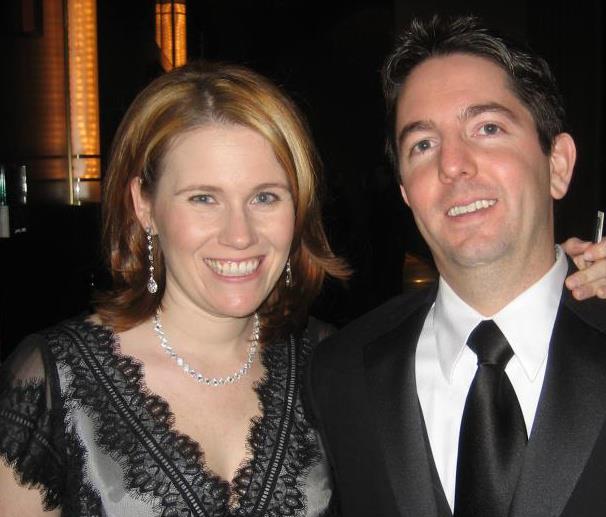
I’m glad to introduce you to Annie Burridge, Senior Vice-President for Institutional Advancement for the Opera Company of Philadelphia. I had a chance to get to know her during the Opera America Leadership Advance, and I think her experiences will resonate with many “reformed singers.” Here’s her story.

How did you get your start?

Technically, my theater career began at age 6, when I was the Littlest Indian in a production of Peter Pan. My mom was a music teacher, and there was always music in our house. I sang all through school, was in musicals and community theater productions. I earned an undergraduate degree from Pennsylvania State University, majoring in Vocal Performance and minoring in Business. (There’s some classic foreshadowing for you, because even though I didn’t really know what Arts Administration was, I thought it sounded interesting.)

I had success and support at Penn State, but didn’t really know whether I was competitive on a larger scale. I did some graduate school auditions, and got a good offer from New England Conservatory. Right before starting the program, all of the incoming students auditioned for a spot in the Opera program, and I was extremely fortunate to be one four sopranos selected. (The entire program was capped somewhere around 25 singers) I worked with John Moriarty, and sang Mrs. Wordsworth in Albert Herring and Cunegonde in Candide. I was really happy with the opportunities that I was given while in school, but found my outside auditions to be a little less successful: I did a pay-to-sing in Salzburg one summer, but didn’t have much luck in the YAP realm until the December after I graduated. Des Moines Metro Opera called on December 23rd: they needed a Gretel for their January Opera Iowa tour, and even though I hadn’t had a live audition for them (I had sent a recording of Zerbinetta’s aria, because they had programmed Ariadne auf Naxos for the summer season), they offered me the role. I did the tour, and stayed on for the summer season. The following spring I did the Pensacola Opera Young Artist program.

It sounds like you were on your way!

Maybe, but it didn’t so much feel like I was on my way. On one hand, I felt incredibly grateful to have those professional opportunities; I learned so much! It was extremely frustrating. I knew that I could tackle difficult repertoire (Lulu, anyone?), but it didn’t seem to matter. It also didn’t matter that I was a good writer, or a natural planner. I rewrote my classroom presentations for the DMMO school tour, but having that eye for strategic planning didn’t make directors more likely to hire me. I had this whole host of talents that simply didn’t transfer over.

Ouch. That’s a hard place to be.

It was. When the Pensacola program finished I went home to Philadelphia – I had met a guy named Paul in between my residencies at DMMO and Pensacola, so I had some incentive. (He’s now my husband.) And I took an administrative job at the University of Pennsylvania to earn some money, as I was just tired of being poor. One of the perks of the job was that I could take classes at Penn for free, so I signed up for a Marketing class in their Non-Profit Administration program. After the first two classes I knew that I had found my thing, and weeks later I was offered my first arts administration position.

Huh! Did you make the decision to change right then?

Yes. It was a big moment for me. I’ve always been someone who commits fully to a career path, and I felt I needed to choose either the administrative career or the singing career – I didn’t want to dilute my impact in either arena by only giving it half my attention. I discussed it with my husband, cried for about an hour, and then made the switch.

Million-dollar question: was it worth it?

I had an epiphany in the car one day shortly after making the switch: I remembered the sitzprobe of Madama Butterfly at Des Moines, and just being moved to tears at the beauty of the music, the complete experience. I remembered sitting alone in the audience during a rehearsal of Barber of Seville in Pensacola when I was covering Rosina, listening to the overture,and again being moved to tears that opera was my job. And I realized that the moments that stuck with me the most weren’t moments in which I was actually singing. It was a revelation. So short answer? Indeed it was worth it. I call on the experiences that I had as a singer daily in my current position (Ed.: Annie oversees all the development and marketing efforts for OCP.) – my knowledge of the industry and passion for the art form allows me to inspire the people with whom I work and interact. I also feel so much more ownership in my current role at OCP than I did as a singer. I can watch a rehearsal and know that my efforts made a huge portion of this production happen. My traction with donors and the financial health of the organization dictates that I am part of the artistic process. Granted, if it were up to my personal preferences we’d be doing all Britten, all the time! But I enjoy being the person who represents our stakeholders and larger community in those discussions. And finally, those skills that I felt were underutilized when I was singing – writing, planning – I’m using every day.

It’s rear-view mirror time: What advice would you give to someone who is struggling through a dilemma similar to your post-Pensacola frustrations?

Be honest with what you want your life to look like. I was lucky in that I had some blazing arrows pointing me to my place in the industry, but I still have pals who are struggling through these decisions.Think about what you want your life to look like 5, 10, even 20 years down the road. What’s your ultimate goal? How can you pick up the skills that will get you there? Some people need to remain close to the creative process, so they might opt for teaching over an administrative job. Some may want to cobble five or six different kinds of performing jobs into a career. I knew that I wanted to be involved at the highest level of artmaking, and it became clear to me that I wasn’t going to be able to reach that level as a singer. I wanted to be a part of the biggest game in town, and I wanted to be a big part of it.

I think you’ve made it! Do you have any parting words or wisdom?

My boss’ motto is to be nice to everyone, all the time. It’s a small industry, and once you build those relationships you’ll have a network of people to ask for advice and help…because soon that assistant will be running the program for which you’ve dreamed of working. It always pays to be nice.
Tagged , , , , , , , ,

I hate crowds.

Rather, I struggle to interface with more than one person at a time. (I was going to refine that thought to say only during professional situations – conferences, donor dinners, and the like – but when I examine it I have the same issues at a cookout or a big family dinner, too. So there you have it.)

It’s not the fact that I’m particularly shy, or that I’m afraid of new things. It’s the constant ADD of many of the situations. People! Microphone issues! Four simultaneous conversations, each with interesting words, all within 2 feet of me! Awkward small talk – let me check my phone/email/pda to extricate myself!

Yes, I’m obviously an introvert. But I love people – I would just prefer to meet and talk with them one at a time. I can get a better bead on who they are, what’s important to them, where we intersect when I can focus on just one person. (And I’d also like to think that they walk away knowing who I am in a fuller sense.)

Lifehacker posted an article by Michael Lopp a few days ago about listening, and most of the ways that we don’t do it. I am seriously as guilty as anyone of these errors – jumping in too soon, not asking enough dumb questions, letting ambiguity hang out there in the air – or worse, pushing past it.

I realize that, with pals and such, I make listening a priority…but I don’t often transition that over to my professional conversations. When I do? Those are the conversations that do indeed make me feel closer to a teammate or colleague – they do build trust.

Note to self: more eye contact, more dumb questions, less talking.

I’m all ears.

Tagged , , ,

Age of Reform

ImageKurt Ellenberger wrote a thoughtful article for the Huffington Post about the arts and higher education. In it, he talks about the ways in which college music programs prepare students for a field that is shrinking, and doing so using models that are based on the artistic realities of the 1950-70s. Key faculty are charged to recruit, to provide the economic engine that will power the educational train: but, with undergraduate degrees costing near 50k, graduate degrees close to if not more, it’s a lot to spend for a career with no clear path to employment at the end of the journey. I’d agree with him that we need to rework the system a bit.

I remember talking with one smart, savvy singer a few years ago…he was frustrated at the lack of a clear path, and remarked “My buddies who are going to law school know how long they’ll be in school, how much it’ll cost, what they can expect to earn when they get out. I’m going to have close to the same amount of training in my field as they will in theirs, but I may not even be able to make an honest living.”

He was frustrated, and rightly so. There are very few guarantees in our current economic climate, but among artists they number even fewer. One could place the blame on the academic institutions, for taking students who obviously couldn’t make the grade. But, as someone who auditions a fair number of undergraduate singers every year, I can say that the rates of change in a young voice can be both profound and quicksilver: even during the small window between their autumn audition and their arrival in late spring for rehearsals a Studio Artist can sound – for better or worse – like an entirely different animal. 

So, how to reform this model that obviously doesn’t work? Mr. Ellenberger talks about diversifying: finding the things that make each program special and capitalizing on those key elements. You can likely pull the names of schools who have done this off of the top of your head: Berklee for jazz, Juilliard for classical music: Rice in Houston has a reputation for singers with strong technique, University of Maryland for skilled singing actors. (There are many more…but there are also many programs whose strengths are not clearly defined.)

I think it’s a step in the right direction. Rigorous coursework, one-on-one mentoring and quality performance opportunities are still the building blocks to strong, vibrant musicians, regardless of discipline. But I’d also, in this age of specialization, call for two other aspects that should be mandatory in that education:

  1. Exposure to professionals in related fields, or professionals with that same undergraduate degree who have transitioned into something different. A panel, once or twice a year with a group of people who sat in the students’ places, but have found a non-traditional way to use the knowledge that they gained. 
  2. Cuts. (Controversial, no doubt.) Being asked after a number of semesters to rethink your choice of a degree if your teachers see you struggling with the coursework/physical demands/lifestyle is not a bad thing. (Although at the time I think it probably can feel very much like one.) To have a group of people that know you give you honest feedback and offer you options? It seems like a very responsible kind of guidance. And also, to know you have to dig in to succeed, to stay in the program? (Or to ultimately prove them wrong?) Well, taking that responsibility upon one’s own shoulders can be empowering.

Thoughts? Put on your arts education reformer’s cap, and tell me what you’d recommend.

Tagged , , , , , , , , , , ,

Opera-Nerd Camp!

I’ve been meaning to recap the experience that I had at the Opera America Leadership Intensive for several weeks now. It seemed daunting when I first got home, rehashing the intense experiences, the questioning, the warm community that formed. It seems even more daunting now that I’m several weeks removed from the experience… it was a beautifully rich experience, once that I’ll be reaping the benefits of for many years, I feel sure.

I can say the following with certainty: it is a true gift to be given the opportunity to examine one’s professional circumstances from an industry perspective, rather than from one’s position within an organization. (And honestly, after a certain point people will assume that you know enough to figure the important stuff out on your own, even if you’re convinced that you are not capable in the least). In the most well-connected places, I’d wager that one wouldn’t have the luxury of a high-powered study group assembled of the best and brightest from around the country.

(Let’s be honest, it was like an Opera-centric Hogwarts. And this Muggle is thrilled that she made it in!)

It was luxurious. Challenging. Thought-provoking, in all the best ways. To have the time to figure out what’s important? And to do so in a room full of experts and like-minded neophytes? Well, it was equal parts energizing and uplifting… but it wasn’t without big moments of self-searching and doubt.

It’s funny…one of the most transformative experiences that I had as an artist came after I had (mostly) given up that performance path. I remember sitting in an audition room at the Curtis Institute in Philadelphia, listening to a steady parade of singers sing their audition rep in a small black box theater. At some point during that, my first day on the “other side of the table”, I realized that 90% of the people who came through the door were just like me: they wanted to sing, they were working on their vocal issues, they were trying to figure it out. But when that one person came through the door who could really SING? Well, after that the whole situation made sense: the construct wasn’t made for the 90% of the worker bees, it was for the top 10 %, the 5%, or in our case that autumn, the top 3%. (There’s another post about the death of the working class of opera singers, of regional careers, and all kinds of related topics in my drafts folder…we’ll get to it sooner rather than later, I promise.)

But the time we had in New York? The grace of sitting around a table with whip-smart colleagues from all over the US, from Canada and Europe? Equally revolutionary…maybe moreso now that I realize how very special the opportunity was. Not only do I now have a network of people whom I trust, but I also realize that I might actually be able to have a seat at the table…I might actually be able to responsibly champion this crazy art form that I fell in love with.

(That last thought is equal parts exhilarating and terrifying.)

Friends, I challenge you to ask some big questions about your art, your strengths, and what the perfect intersection of the two might look like.

(And naturally, I’d love to hear about those revelations and the ensuing questions.)

Happy Tuesday, y’all.

Tagged , , , , , ,

Artistry + Kindness = Leadership?

One of my great pleasures post-opera season is catching up on reading. I’ve slammed through three books, countless magazines and a daily date with the New York Times, and am trying desperately to get rid of all of the (1,000+) notations on my Google Reader.

(It’s a bit of a task, as I am something of a virtual hoarder. Before you ask, I will not be going on Bravo tv to reveal the size of my email archives or the shopping lists from 2006 that are still on my computer’s hard drive. The answer is an unequivocal “No.”)

I stumbled across two great articles in the Harvard Business Review that really speak to me.

The first (which you can find here) focused on the traits that great artists and great leaders share. The author, Michael O’Malley, calls out twelve specific traits ranging from Intent (the desire to be superlative) and Skill (having the tools to bring a vision to fruition) to Pleasure (providing occasions for emotional buy-in and fulfillment) and Criticism (looking for and incorporating feedback). I for one think that any kind of arts training sets up these building blocks in concrete ways, and can cite several examples from my own experiences. (I’d share mine, but I’m guessing that you’ve got one or two yourself – I’d love to hear yours, either via email or in the comments.)

The second (you can find it here) is about the importance of kindness in business. William C. Taylor cites some beautiful examples about businesses who made a personal connection -and tangentially won significant attention – because they did the right thing and were nice to someone in need. It’s easier in the arts I think to cling to this idea, because we all know how negativity can sabotage the most promising production/process. It’s one of the areas in which my boss excels (although she’s pretty darn clever to boot – make no bones about it.), and that contributes to a wonderful atmosphere, high retention, excellent product and strong word-of-mouth press. It’s not a surprise that I found this book on her bookshelf several years ago…and if you know me, also not a surprise that it’s still being held hostage on my bookshelf.

I keep coming back to one particular kernel of truth: once an artist, always an artist. I am encouraged to see the for-profit sector embracing the thought of artistry in leadership, but I wonder if the gatekeepers – those HR personnel charged with finding creative problem-solvers – know enough about the training to actually place some of those non-traditional resumés in the Yes pile, to take a risk on someone who might have the skill base but not the industry experience. I challenge the industry, and all of us who have started as performers and art-makers, to find actual, practical value in an arts education, and to once and for all lose the tired stereotype that artists are scattered and unreliable and far too difficult to work with. You cannot value the traits without also valuing the artists who exhibit those traits, who study to perfect those skills, and the institutions who shape their careers as working artists, recreational artists, arts consumers, and at-large members of the national workforce.

Thanks for listening. Let’s all try something a little out-of-the-box, shall we?

Tagged , , , ,

Socrates would totally dig it.


I signed up for a daily email from Box of Crayons. Succinct, clean, I find them a great way to focus/aim my efforts for any given day. I kept this one, from a handful of days ago, starred in my inbox:

The most powerful coaching question in the world: “And what else?”

It not only teases out more from the person you’re coaching (the first thing they have to say is never the only thing), but it stops you from jumping in and offering solutions or advice before it’s welcome.

I have become infatuated with questions. I’m no longer so young as to feel that I have all of the answers, or so insecure that I sweat asking the wrong question… and I also no longer feel that need to fix things before I have all the information: I’m likely not the only person who has stepped in to solve a problem that wasn’t actually a problem.

I am delighted by the combination of a thoughtful question, some (direct, but not confrontational) eye contact, and silence. It’s a crucible for honest discussion.

Tagged , ,

Home Remodeling, as a metaphor for Career Transition

My morning started with a cup of coffee, the New York Times, and a jackhammer.

(You read that correctly.)

You see, we’ve finally launched into a much-needed home renovation project, and a 4-inch-thick slab of concrete needed to be excavated from my second-floor bathroom. Now, had I not had a family who tore houses apart for summer fun instead of going to the beach or Disneyland (for the record, stripping wallpaper is no where near as fun as riding rollercoasters or swimming or making sandcastles. Just sayin’.), I’d be scared. But even had the outcome been said cement ending up in the dining room below, it would’ve been OK. Not ideal, but we would’ve learned something important (and, likely expensive) about the structural issues in the house.

Investing in something, and following it wholeheartedly to its natural conclusion, is never a bad thing.

I’m reminded of this especially as our summer season has just ended. I can draw parallels from our Studio program, which is geared towards talented undergraduate and first-year-graduate students, to the significant kind of home renovation that I’ll be vacuuming up for days and days. The Studio program is designed to give singersfirst-hand knowledge of the field, from a professional viewpoint. We try to go beyond the rehearsal schedule (which is compact and intense), to give them exposure to industry folks, tax professionals, musical and dramatic coaches, and a whole host of people who have made careers in this crazy field. The number of careers that people have carved out, and the ways in which they’ve done the carving, are as varied as the people themselves. They also see peers and recent alums, all quite talented, but some seeing a strong measure of success, others struggling.

The part of the program that we don’t advertise as much, but that is just as important? It’s a place where they can get enough information to decide if this crazy career is, in fact, not the right thing for them. It’s an important decision, and one that may of them haven’t vetted through their years of schooling. Most summers there are one or two Studio Artists who start to ask questions about what other things are out there, what level we think they’ll get to with their innate talent (Answer: I don’t have a clue, ever… there are simply too many variables to take into account.), what we recommend. The process is not unlike tearing open dry wall, jackhammering cement, checking the subflooring for soft spots, and rebuilding from the inside out.

The great thing is that, eventually, they do figure it out. Some stay in the field, recommitted to a performing career. Some move to related fields, and explore administrative jobs, artist management, and the like. Some take the discipline that they’ve cultivated in the practice room and head to law or medical school. And while we believe in the musical talent of every one, we don’t stop believing in them because they’ve stepped away from the footlights.

So, as we limp through the last few weeks of August, towards Labor Day (aka the Educator’s New Year) and the beginning of the academic year, I have a challenge for you: Take some time to tear off some of the dry wall, check your subfloor. What parts of the room are worth keeping, and what needs a rehaul? Will a change a paint color be all you need, or will you be jackhammering cement? Look at the career you’ve invested in: it’s time to recommit or remodel.

(New profiles and a more-regular posting schedule will resume in early September. Thanks for hanging in thus far!)

Tagged , , , , , ,

Show up.

I’m going to save the Leadership Intensive recap for another day as, quite frankly, I’m still processing a lot of the information.

Maria Popova, who curates Brain Pickings, came across a letter that Tchaikovsky wrote to his benefactress, Nadezhda von Meck (aside: that might be the coolest name ever, for the record.) about the correlation between work ethic and creativity. She parallels it with a video from Jack White of pop music fame. It’s certainly not a new thought, the slogging through when the Muse blows off your invitation and you’re left with a blank piece of paper, an empty mind, possible even a white text box on a blogging program…

I digress.

I would, however draw some additional parallels between creativity and work ethic and leadership. There’s a great article in Forbes by August Turak, that makes the argument that great leaders also need to be great followers.

In both cases, whether you’re wrestling an idea onto the page or climbing up the corporate ladder, you need to:

  1. Show up. You have to do the work, or at least be ready and willing to do the work, even if nothing comes. (There’s the Woody Allen quote about 80% of success is just showing up. There are days when that first step is indeed the most difficult – I totally get that. Show up anyway.)
  2. Be aware. Surroundings. Language. Subtext. In both situations that additional information can only help to clarify/troubleshoot/inspire.
  3. Stay flexible. The path down which you need to walk may not be something you had planned to tackle… but that doesn’t necessarily mean it’s the wrong path.

I find that #2 can be the trickiest…we can get bogged down enough in our own to-do lists, with our own inner judges that it can be difficult to really watch, listen, perceive. When we take that time, though, don’t all manner of things get easier?

I have thirteen days left in the summer festival season. My plans are to take my own advice (well, to try to anyway) for the next two weeks and apply it to my job. After that I’ll be making an early run at this, as a way to discipline my inner writer. (I got about halfway through – about 25,000 words – last year, before the fall audition travel schedule made the daily quotas impossible. Without that distraction maybe I’ll make it to 30,000!)

Today, if you do nothing else? Just show up.

Tagged , , , , , , , , , , ,

Out-of Office: Leadership Seminar

I’ve let this project lag just a little bit (Ahem. I may exaggerate a little…), but it’s for a great reason. As part of the Opera America Leadership Intensive, I’ve been spending the last several days in a sunny conference room in New York with 13 colleagues from the US, Canada and Europe, talking about the future of the art form – our art form – and our place therein.

I won’t lie: it’s an extremely exciting time for yours truly. My colleagues are smart, warm, witty, and generous. It’s a little ridiculous, actually, how fantastic these folks are.The facilitators are knowledgable and gentle, even as they push us outside of our comfort zones (hello, public speaking!) and challenge our assumptions of ourselves and the field at large. I count myself amazingly lucky to be counted among this group of students.

We’re all asking a lot of questions, sharing volumes of information. And of course, being in New York there are things to do, friends to connect with, any number of millions of directions to explore. Even if I weren’t in season (WHICH I AM. How am I not in the office? And more importantly, have you picked up tickets for Rake’s Progress yet?), I’d find it slightly overwhelming. I have an awful lot to chew on, with more to think about and tackle in the days to come.

On Tuesday morning, we were all tasked to give our 5-minute personal history to the group. Five minutes to let the group know how you came to be sitting around that table, focused and passionate about an art form that many would describe as a hard sell.

And can I tell you, singers who are doubting whether a performance path is for you? Those of you who fell in love with drama and theater and music but who realize that you may not light up a stage? (Or want to light up a stage?) Can I simply tell you that the group of people around that table – like me, maybe like you – had those same doubts at one point. They parlayed their love of the art form, and the self-knowledge that footlights weren’t their thing, into leadership roles at major and influential opera companies around the country. They are Development Officers, Artistic Directors, Community Programs Directors…the list goes on.

It is a beautiful thing, indeed.

Tagged , , , , ,

ROI.

One of my favorite summer “work” activities has to be helping to prep artists to talk to the media, and in the process learning a little bit about them that we could use as a ‘hook’ for interview pitches. I have a list of questions that a pal and former colleague started, that we’ve added to over the last few months. Questions range from practical (“What can’t you travel without?” “What’s the best advice you’ve received?”) to philosophical (“Do you think sports salaries are merited?” “Where does the current system of young artist training fail?”) to totally whackadoo (“What’s your juiciest backstage story?” “Who was your worst colleague?”)

(For the record, those last two questions I would LOVE to hear the answers over a pint at the Vienna Inn…but find a graceful way to decline them in a real interview.)

One gentleman we spoke to came to singing after studying business for quite some time, and he had a markedly different perspective on the field, his work, and his responsibilities. He treats his career like a business: which it is, although we artsy types have a difficult time reconciling the art with the business. (There’s a reason that we can all still identify with the folks in La bohéme…) Another alum of the company puts a certain percentage of every contract into a fund that is meant to reinvigorate his artistry: language work, coachings, travel, research…if it informs his music making, it’s fair game for the fund.

I stumbled across this article, and it made me wonder if we’re not doing our field a disservice by not addressing these business aspects in our training programs. Return on Investment seems like a cold way to look at the profession; taking the passion and alchemy out of the art form. However, I hear every summer from singers whose friends are in law school, medical school…these pals know how long it will take to get their degree, to likely find employment, and how much they can expect to make when they begin their professional career.

Ain’t nothing like that anymore for classical musicians, if every a thing did exist.

But when is the right time to address these issues? Undergrad? Grad school? And, is it possible to address it when each career path is so very unique?

Tagged , , , , , ,