Along the same lines as Wednesday’s post, here’s an article from the NYT about the new prevalence of online educational resources. Coursera, Khan Academy, heck even YouTube tutorials. There’s so much knowledge for the taking! Perhaps the hardest aspect of the whole process is choosing what to study…
Indirect Routes
Career paths that share a common starting place in the arts.

A Framework for Creative Change
 There’s a lot of buzz out there about the creative class… those people, regardless of industry (and while I might take some serious flak for it, I am of the opinion that not every person pursuing a performance degree/career is, in fact, creative. But that’s a topic for another post.) are innovators. In his book The Rise of the Creative Class, Richard Florida states that “access to talented and creative people is to modern business what access to coal and iron ore was to steel-making.”
That quote is 10 years old, my friends.
Adobe did a research study on UK workers, which showed that most people – fully two-thirds of those surveyed – felt that they were not living up to their potential. To quote Dylan Jones-Evans (Western Mail, 7.14.12)
“Four out of five believe that there is an increased pressure in work on being productive rather than creative. In addition, risk aversion is seen as a barrier with “playing it safe” being the strategy usually adopted by organisations which results in those who are innovative and entrepreneurial having their ideas stifled by those who are less creative. They also feel there was a lack of time to create new things and that they cannot afford to be creative.”
Hello, US Classical Music Market.
We’re seeing the big 10 operatic warhorses in heavy rotation. We’re seeing young artists inhabiting the roles usually given to established singers. We’re seeing a heck of a lot of Mozart, Beethoven, Brahms on chamber music programs. Companies are cutting back, scaling back, folding. Audiences are aging and shrinking. In terms of building a younger audience? We are the 98-pound-weakling trying to woo the quarterback’s girlfriend. (She’s mostly not giving us the time of day, but we’re not giving up yet.)
How much of that, I wonder, has to do with an art form in serious transition? In its heyday, having season tickets to the opera was akin to what having season football tickets are today. (singers/athletes; audiences; financial models and arenas…the sports analogies are really endless.) But that nostalgic glow is only attractive for a small margin of the population; those folks who are in a position to donate, to keep small companies afloat and to shore up the finances of larger ones.
It’s a difficult time to be an artist. (although, let’s be frank…has it ever been easy? I mean, we all know how Bohéme goes, right?)
In the current climate, it’s only natural to harbor some doubt… there’s some serious math to be done, weighing passion against sacrifice, talent and preparation against the national field. Personal preferences can take a backseat to financial necessity.
What if you’re the one playing it safe? With a desk job and a 401k and a nice apartment? And a constant headache and difficulty getting out of bed in the morning and the tendency to self-medicate because you’re just somehow not feeling it?
The Harvard Business Review has some advice. As a former (reformed?) teacher, there’s something inherently less scary/more doable when imagining a career leap as a curriculum or night course…setting up an experiment, finding ways to gather more information, sticking to a timetable rather than experimenting endlessly. (That’s called ‘having hobbies.’)
What scares you the most about making that transition?
Try Something Different
I signed up for a daily newsletter from Box of Crayons, a firm based in Toronto who helps people and organizations get more creative and focus on doing great work, rather than simply good work. (I was drawn toward them when, at some point in the last few weeks, I realized that my job had morphed into a one-word position: “Emailer.” It’s temporary, I know, but the sheer volume of inbox madness that needed to be read/acted on/filed/archived/trashed was totally discouraging.)
This was today’s bit of wisdom:
Tom Peters once said a lunch spent alone is a lunch wasted. I’m not sure I totally agree (sometimes a little downtime is nice) but still – why not call up someone outside the usual gang and grab a bite to eat?
It’s a July Friday. For many folks, it’s the start of the weekend. Things are perhaps a little less intense than a usual workday…if you have an hour free, isn’t it the perfect time to call (or email…I suppose) someone that you want to know more about, or someone who might help you answer some of those lingering questions?
The definition of insanity (say it with me, kids) is doing the same thing over and over again, expecting different results. Why not take a tiny step outside that very comfortable box today?
Thanks to all of you who have been patient at the lack of profiles over the last month. It’ll likely be several more weeks until I’m back on schedule, but I do hope you’ll check back – I have some great folks who have shared their stories with me, and I can’t wait to get them to you! (And once I grow back some of these brain cells, I’ll be able to make them grammatically correct and everything! I promise.)
A Virtual Toast to Transitions.
 We hosted a small symposium this past weekend. Kim Pensinger Witman and I were fortunate enough to attend the Opera America Conference in Philadelphia a few weeks ago, and were both inspired and challenged in the seminars which we attended. But oftentimes our artists are bypassed from these larger discussions, or they’re expected to listen but not participate actively…the general directors dictate the tone and flow of the conversation. (It’s not a criticism – the GD’s are the ones who deal with those overarching principles on a daily basis…they should be the folks to initiate the discussions about strategy and the state of our art.) We wanted to give our singers an opportunity to join the conversation.
We called our two-day event Recitative: Plain Talk About Opera, recognizing that what we wanted to do wasn’t glamorous or sparkly…not aria-like in the least. We wanted to raise the questions that the singers/directors/artistic admins were pondering, but maybe hadn’t had the opportunity to discuss. And we asked a group of people who understood our demographic to help us with these discussions.
(Have I mentioned that, by and large, opera people are generous and helpful and agreeable? The colleagues who assisted with these discussions – artistic administrators and general directors and singers and conductors, from companies in our own market to Left Coast-ers, and even a representative from the Continent! – surely were… we are indebted to them for their time, their thoughtfulness, their candor. Opera people are indeed pretty cool.)
It was a fantastic, provoking, sometimes heated two-day discussion. I was struck very early on with two observations: firstly, that there was such a passionate feeling towards both the art form and the collaborative structure of the art form. (not a surprise, certainly, but it was a wonderful realization of the intensity of feeling.) Secondly, that there were so many people who had started as singers who were now deeply involved – as artistic administrators, casting directors, general directors – in a non-performance aspect of the art. Do they contribute to the discussion as administrators? Most certainly. Do their words hold a different weight because they know firsthand what it’s like to biff a high note in public or trample over an overture in rehearsal with a respected conductor? I think that they might. They know what it feels like to perform at the top of their game. They’ve been moved by an exceptional performance, whether as an onstage colleague or an audience member. It’s invaluable information…and sure, a lot of it can be learned. But maybe not all of it.
It’s not an unusual path, for sure…transitioning from singer or actor to artistic or general director. I’m glad that there are so many people leading companies who, at one point, made the noise…stood in the spotlight…took the curtain call…and ultimately realized that they were meant to support the art form in a different way. Raising a virtual toast to transitions!
Giovanni and the Derecho, part 2.
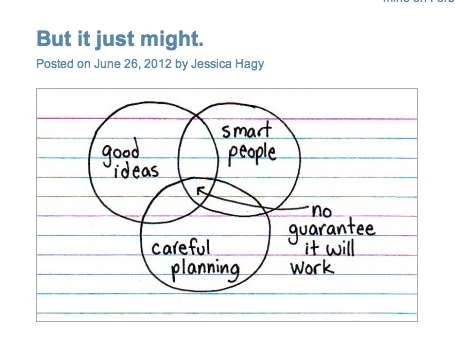
Once again, Jessica Nagy of Indexed has my number. We’re trying for a full run – the first since the dress rehearsal – of Don Giovanni tonight. Send some well-wishes to our very talented cast, crew and tech staff as we prepare to get this opera up on its feet!
Giovanni, interruptus

This weekend reminded my little company of the importance of flexibility. We were about two-thirds of the way through the opening night performance of Don Giovanni when a derecho (a word I didn’t know until Saturday morning) blew through, taking with it our power, our beautiful projections, and endangering the safety of patrons and performers alike.
It was frightening, and heartbreaking: hours and hours of focused work, rehearsals, a set and costumes built from scratch all abandoned in an attempt to shelter from the high winds and horrible lightning. Yet Don Giovanni was not dragged to hell by the Commendatore – rather he remained alive, able to seduce for another day.
Fast forward to the following Sunday – a matinee performance, and one which had been sold out for months. It was a 90+ degree day, and much of the region was still without power. Our theater and offices were also without power, so the performance was obviously not going to happen.
We met at the theater: the box office staff, my boss and her boss, our production manager, the house manager. We grabbed cell phones and computers, and BB brought a mini generator to recharge as we needed. We called the orchestra and cast and crew to schedule a replacement performance, which came together much more quickly than we could’ve hoped. We crafted language for the website and patron emails, and our Web Manager SaM pushed the content out. We pulled up lists of ticket buyers for the show and everyone – even the Senior Vice-President – started calling patrons to let them know that the performance was cancelled. As cars pulled into the lot, people met them to explain the situation.
I know that there were some people we did not reach. I know that many folks – including the entire cast and crew, and frankly the admin & artistic staffs – were supremely disappointed. But rather than saying “oh well….nothing to be done”, we investigated other options and quickly made a plan. That flexibility is one trait that many artistic types have, and I was very happy to have been surrounded by a group of artists and musicians – turned- administrators when the chips were down.
The takeaways? When something unexpected happens (and I think this could apply to both good and bad things), take stock and make a plan. Give that new plan room to grow and morph. Titles don’t matter when there’s a job to be done, and in fact the leaders I revere the most aren’t afraid to get their hands dirty.
Still no power on campus (as of this writing), but we’ll be working offsite in several homes to continue preparations. And we’ll all be crossing fingers and toes that the power comes on in time for tomorrow’s rescheduled performance. (Let’s be honest, having Giovanni still running around is a bad thing, karmically speaking!) Wish us luck!
una pausa
Another little blog hiatus is looming, as we’re hosting 7 performances and a 2-day symposium over the next 10 days. I’m so proud of the work that’s been overflowing practice and rehearsal rooms, and of the people who are so generously entrenched with us. If you’re in the greater DC area, stop by sometime soon for some great singing!
Three Chances
According to an old Chinese proverb, we’re given three chances to succeed in life. If we use them wisely, we get another three. If not, I’m afraid that’s it. There will be no more.
There’s an interesting article on Fast Company that, while it seems on the surface to be about making crazy career choices, actually seems to be about taking action. The author, Martin Lindstrom, wrote Buyology and Brandwashed, and has this to say about taking action:
As I emptied my desk ready for my new venture down under, a colleague asked, “How do all these interesting opportunities come your way? What do you do?” I didn’t know what to answer then, but I do now. Not only have I always had an eye open to adventure and opportunity, but I have always had a tendency to seize them the moment they occur. Herein lies the problem for many. Too few of us see the opportunities that are presented to us. Even fewer of us dare to meet them head on and run with them.
I’m currently watching a rehearsal of Don Giovanni – it’s my first production of this opera, and it is rocking my world. But the production, as much as I’m enjoying it, is second to the openness of the actors, their willingness to embrace some truly crazy opportunities, and to courageously run with them. I’m simultaneously inspired and humbled.
It’s Monday. You could go back to the grind. Or maybe you could keep your eyes open for that crazy opportunity to say “yes!”
Clarity, of a professional persuasion
I had a conversation a few weeks ago with a pal, and it made me realize that I should maybe clarify a few points about this little project of mine.
This space is, at its best, meant to be a place to share encouragement and tales of career-shifting for folks who started out their careers intending to pursue the arts.
There are lots of people who persevered in following their dream, and have attained that initial goal – I am continually in awe of those folks. (The aforementioned pal is a model of quiet focus and creativity, and has built a significant career on the strength of her artistic talents. She’s the bomb.)
I didn’t have that kind of clarity as a student. I wanted to be a Jack-of-all-Trades (but highly successful at everything I tried, naturally…ah, youth.), and college made me aware of a multitude of different goals rather than focusing my attention on a single goal.
But to all of you, my pals and acquaintances who are making lives as performers and art-makers, we’re proud of you – I’M proud of you. Your success in this crazy field, in this even-crazier economy is really something to crow about. And I know that many of you have been asked to talk about the how-to of your careers with students at the outsets of theirs – “How did you get from point A to point B? How much did you have to practice? How long did it take to get your first break? Is it all luck? Should I throw in the towel before I start?”
It was difficult for me to find people to whom I could ask those questions, mostly because it took me a while to figure out what I wanted to be when I grew up (Honestly, I’m still not 100% sure; but I’m pretty durn happy where I am.), and because I knew that I wasn’t going to be a performer long before I acknowledged it publicly.
So, through examining other folks’ winding career paths, I am hoping to acknowledge two things:
- That, even though I’m not performing, I consider myself a successful adult. It took me a while to figure it out, but I’m better for doing it, and ultimately happy.
- That my arts training – 80% of it – I still use, in various ways, every day. Organization, collaborative skills, public speaking…and in my case, a lot of the musical skills/knowledge, too.
The point is to reframe how those of us who are not primarily performing/art making define success, how we keep our hand in, and to celebrate the haphazard paths that make our lives richer for the detours.

 Indirect Routes