Day Jobs: The Conundrum

I’m new to Austin Kleon. (Late to the dance, but I’m still having a pretty good time thanks to his words and visuals!) He’s written two books (the newest is just out), been interviewed and reviewed, and lectures (for Ted! And SXSW!) about creativity and the web.

(How cool is that?)

I stumbled across him on my twitter feed – caught the hashtag #steallikeanartist.

What?!

But then I clicked through to this: On Keeping or Not Keeping Your Day Job. 

It’s a polarizing thought, for sure. Do I throw myself headfirst into a new career, starting at ground zero, with little more than desire and enthusiasm (and the internet, naturally) to help me through? Do I toil (word choice for dramatic effect) forty hours + a week at a day job, slowing my progress (and starving my soul, perhaps), to only spend a little time on my passion?

It’s a tough question in particular for performers, who have a large physical component to their chosen profession. Without so many healthy hours in the ol’ woodshed, you can’t routine those skills that are needed to survive rehearsal, let alone a string of performances. I would liken it perhaps to an athlete: if you’re in training, you’re in training and you’re devoting all of your time to your craft.

But, to play the devil’s advocate a bit: if you had a day job that was rewarding/complementary to your performing goals, and had to worry less about making ends meet, would that make you feel freer? Or would the simple act of splitting your attention make you feel more constricted?

Its fair to say that it depends on the individual. I’ve worked with a writer who is brilliant – he could very likely make a living simply with the sort of writing he does. But he has a day job in a complimentary industry. In this industry job, the gigs are shorter and higher pressure; there’s a lot of social interaction (he works from a centralized office rather than at home); and he’s trying to encapsulate someone else’s vision. By contrast, when he works on his own writing, it’s from a place of creative oversight, and he does much of it in isolation.

The two jobs cross-pollinate one another.

As a dramatic tribe (I for one likely wouldn’t have picked performing if I hadn’t been so strongly drawn to its inherently dramatic aspects), I think we tend to be an all-or-nothing tribe. We throw ourselves in, hoping to sink or swim, and become confused when the choices aren’t that clear.

I wonder if we’d be better served trying to have our cake and eat it, even if just for a little while?

My favorite quote from Austin’s entry is:

Remember: All advice is autobiographical. YMMV: Your mileage may vary. Feel free to break the rules. Make the life you want.

Yes, indeed.

Opportunities –

If you’re a dancer looking to make a transition to Arts Management? The Kennedy Center has just the thing for you!

A Training Program for Performing Artists

The Performers in Transition Arts Management Fellowship is a program of the DeVos Institute of Arts Management at the Kennedy Center designed to train professional performing artists with a proven dedication to transition into arts management. A structured blend of formal and hands-on training, the Fellowship combines arts management training with applied experience in producing a performance with a Brooklyn based organization.

The Fellowship is offered in conjunction with the BAM Professional Development Program, a collaboration between the Brooklyn Academy of Music and the DeVos Institute. The BAM PDP will provide professional development training and deeply discounted theater and rehearsal studio rental to a select group of Brooklyn non-profit organizations each year.Each season, the Fellowship will focus on one performing arts discipline.

The 2012 Fellowship is Open to Professional Dancers working in New York City

If you’re already committed to the Arts Admin track, there’s a 9-month DC-based Fellowship as well.

An Immersive Program in Arts Management Strategy

As a key part of the DeVos Institute’s mission, the Fellowship at the DeVos Institute for Arts Management is an immersive program in arts management strategy designed to prepare mid-career arts managers for executive positions in today’s complex arts environment. Hosted at one of the largest and most dynamic performing arts institutions, the Fellowship offers a structured blend of academic training, hands-on work experience, independent and collective learning opportunities, and personalized mentoring.

Fellows develop close working relationships with Kennedy Center leadership, complete significant projects within the context of the Kennedy Center, and are connected to a vast network of DeVos Institute alumni throughout the United States and in 39 countries worldwide.

Deadlines for both are approaching quickly- March 15 (eep!) for the Performers in Transition program, April 1 for the DeVos Fellowship.

Good luck!

Stop me if you’ve think that you’ve heard this one before…

…but here’s another bit of theater wisdom, echoing the previous post but condensing it in a helpful way. (Brought to my attention by LaJefa herself – a colleague who knows a thing or two about parlaying a theater background into a significant career.) I am a big fan of #6 (Do what needs to be done) and #10 (Doing the Best You Can With What You’ve Got). Amen, and again I say Amen.

Job titles are flashy…but the work most often is not. I’ve driven artists from western DC to Baltimore in my roller-skate of a coupe because the flight was affordable. On days that are slated to be both hard and thankless? I’m not above plying people with treats to help them feel cared for and thereby reframe their day. My supervisor has found childcare for visiting artists, and frequently houses visiting artists in her own home. (It’s a beautiful place, to be sure! But giving up one’s privacy regularly for one’s job is definitely going above and beyond.) Being not just capable, but willing to do whatever needs to be done? It’s important, especially in smaller offices. It’s not a given, nor is it something we should take for granted.

(By the by – bonus points if you get the Morrissey reference in the title line. You are one of my peeps.)

Next profile will be up on Profile Phriday. (Wow. How cheesy. So much for the professional tone, eh? I feel so much lighter now…) James will tell us about his path from singing to a profession that’s a little more secure.

Dirty Little Secret?

There’s been an interesting and relevant thread on LinkedIn, in the Performing Arts Administrators group.

The question on the table is whether we should downplay our theater experience when interviewing for non-industry jobs.

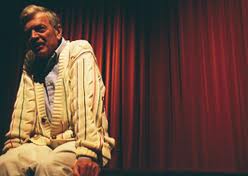
One of the commenters referred to this article, written by actor and drama professor  Louis E. Catron (1932-2010), pictured at right. It outlines 25 Special Advantages that Theater Majors can bring to a job. And I think that in many ways he’s hit the bullseye, especially when referring to those positions that are less knowledge based (medicine, law, dance, opera) and those which are trait-based (i.e. the employer’s looking for someone with a variety of desirable characteristics).

While the list is obviously geared towards students, I find several good parallels.

My question for you – do you tell people about your arts background, or do you let it emerge? Do you find it an asset or a liability?

Tagged ,

Mark Bradley Miller

Mark is a professional photographer, specializing in portraiture, and more specifically headshots. (Those pictures that professional singers use as part of their calling card.) Here’s how he found his path:

Where did you go to school? (Please include program of study, and degree awarded)

I studied music education (vocal certification) at the Crane School of Music, part of the State University of New York at Potsdam. I earned a Master of  Music degree from Carnegie Mellon in Pittsburgh in vocal performance.

What drew you to your chosen field?

My high school music teacher, Diane Abrahamian MacNally was an amazing human being. I was just floating around school – there wasn’t anything special about me, nothing I did really made me stand out. I auditioned for the school musical because there was a girl that I had a crush on, and because any guy that auditioned was guaranteed to get in. One day I was goofing around and really sang out – and caught the teacher’s ear. She  jumped on my potential, and I trusted her enough to do anything she asked. I always wanted to give back, to do for another student what she had done for me.

I got a degree in music education with a vocal performance focus from SUNY Potsdam, and while I felt I learned my craft, I felt like I was unprepared to teach. I wanted to perform, and so I applied for grad degrees at NEC, Curtis and CMU; I wanted the opportunity to study both operatic and musical theater literature.

After graduation from CMU, for several years I made the majority of my living as a singing actor. Sure, I took some supplemental jobs (hotels, restaurants, catering), but I was doing tours South Pacific, Beauty and the Beast, regional theater & off-Broadway shows. But the closer I got to Broadway work, the more elusive it became…and the harder it got when the in-room confirmations didn’t materialize into contracts (Or worse, when the contracts dissolved.)

In October of 2004, I had a turning point. I had a small operation, and planned to take the following holidays off, intending to re-evaluate the whole career thing after the first of the year. But something went wrong with the operation, and I was in the hospital for 5 days with collapsed lungs – resulting in 50% of their original capacity. I felt like my decision was made for me.

I had a gig that I had been hired for before the surgery that I was committed to – a production of The Fantasticks in North Carolina. I struggled – the breath that was so fundamental to my technique, to my ease onstage was gone. I made it through the production, but realized that I couldn’t do it anymore, nor did I feel the same desire and drive I once had.

So, what did you do next?

A friend in Charlotte asked me to help decorate her beautiful 100 year old home. I had done similar projects for friends and family, but she finally said “You’re so good at it, and so happy doing it, why don’t you do it?” I couldn’t think of a good reason not to.

I went to work at Marshall Watson Interiors, a design firm on Manhattan’s Upper West Side. It was a small firm specializing in residential design. I remember applying: I had no formal training in design, but had a little portfolio of the work I had done for the people I knew, and a friend got me an interview. I got the job and worked there for almost three years. After living a freelance performer’s life, the predictability of the schedule was wonderful! I had a full-time job, a place to go every day, something to do. I didn’t have to be self-motivated. And, most importantly, I felt really needed. There were always so many people clamoring for singing gigs that they never felt secure: I knew that there was always someone waiting for the opportunity, who would kill to be in my shoes.

While the schedule and the work were both really gratifying for a while, both the predictability and eventually the lack of autonomy started to wear on me after a while. When I started feeling really frustrated, I began taking photography classes. I found it really gratifying, and spent a year doing it as a creative outlet before deciding to make it my vocation, rather than an avocation.  I’m currently a headshot photographer, working with people who are, in many ways, in my old shoes. I love shooting performers (with a camera, obviously!) My education background and work as a vocal coach helps me to see the best in people; it was always one of my strengths, and I can capture those positive aspects of them on “film”, as representations of their best selves. And my experience in the business comes in handy: I know what’s expected and how best to portray them.

The freelance schedule really fits me better than the traditional office schedule did: I needed the structure for a while, but I truly love project-based employment. And I love being my own boss! I’m confident with money, so that helps – my dad gave me a good foundation, both in finance and in being handy – and I rely on all of those skills as the owner of my own business.

The thing that I miss the most from performing was the family atmosphere: being in a cast, a group of people with lots of commonality. There was an instant connection on a deep level. And those rare moments when I was onstage, really creating and connecting with the audience – I miss those, too. But I get some of those moments back in shooting, in creating those strong, and very quick, connections to people help me to parse out how to show them in their best light. I get positive feedback, rather than the cold “thank you” of the audition room. And I get to be creative on a daily basis. But mostly, I feel that I’m doing something worthwhile: by staging a comfortable, relaxed shoot, having a good time, and then seeing my clients so pleased with the end result solidifies that my choices are worthwhile, and what I do has value.

Any advice or parting shots?

I don’t regret studying music: it’s made me uniquely suited for the professional niche in which I find myself. I count myself lucky to have been successful in three very different creative career paths, and to know that I can carry forward all three in some manner throughout my life. Nothing’s off the table.

Tagged , , ,

Welcome!

I’m so glad you’ve found this little corner of the internet.

My goal for this space is to primarily share stories of how we discern those things that are professionally important to us, and our unique pathways to finding our professional sweet spot.

Now, as a disclaimer of sorts, it’s pretty common to have started in one field and transitioned into another. The number of us who are discerning enough as 18-year-olds to figure out our perfect profession are, lets be honest, pretty small. But I believe that most of those stories are framed as failure stories: of how we fell out of love with an idea, how life forced us to make changes. But I believe that all of these stories are success stories, and that the journey is more important than the starting or ending points.

Most of the profiles you’ll see here are from good friends of mine, and since I have spent most of my career in the performing arts, there are many performer types profiled in these pages. The focus will likely gradually shift to be more inclusive, so if you’re not an artsy-fartsy I hope that you’ll hang in there. The opinions reflected in their profiles are theirs, and I’ve tried very hard to keep their individual voices and thoughts clear. Comments will be moderated, but only to censor content that’s hurtful to my guests. Let’s all play nice, shall we?  (The editorial posts are mine, so if you have issues with those, please let fly.)

I aim to post twice a week, at least one profile and one career post per week.

If you or someone you know have a story you’d like to share, please contact me at indirectroutes@gmail.com